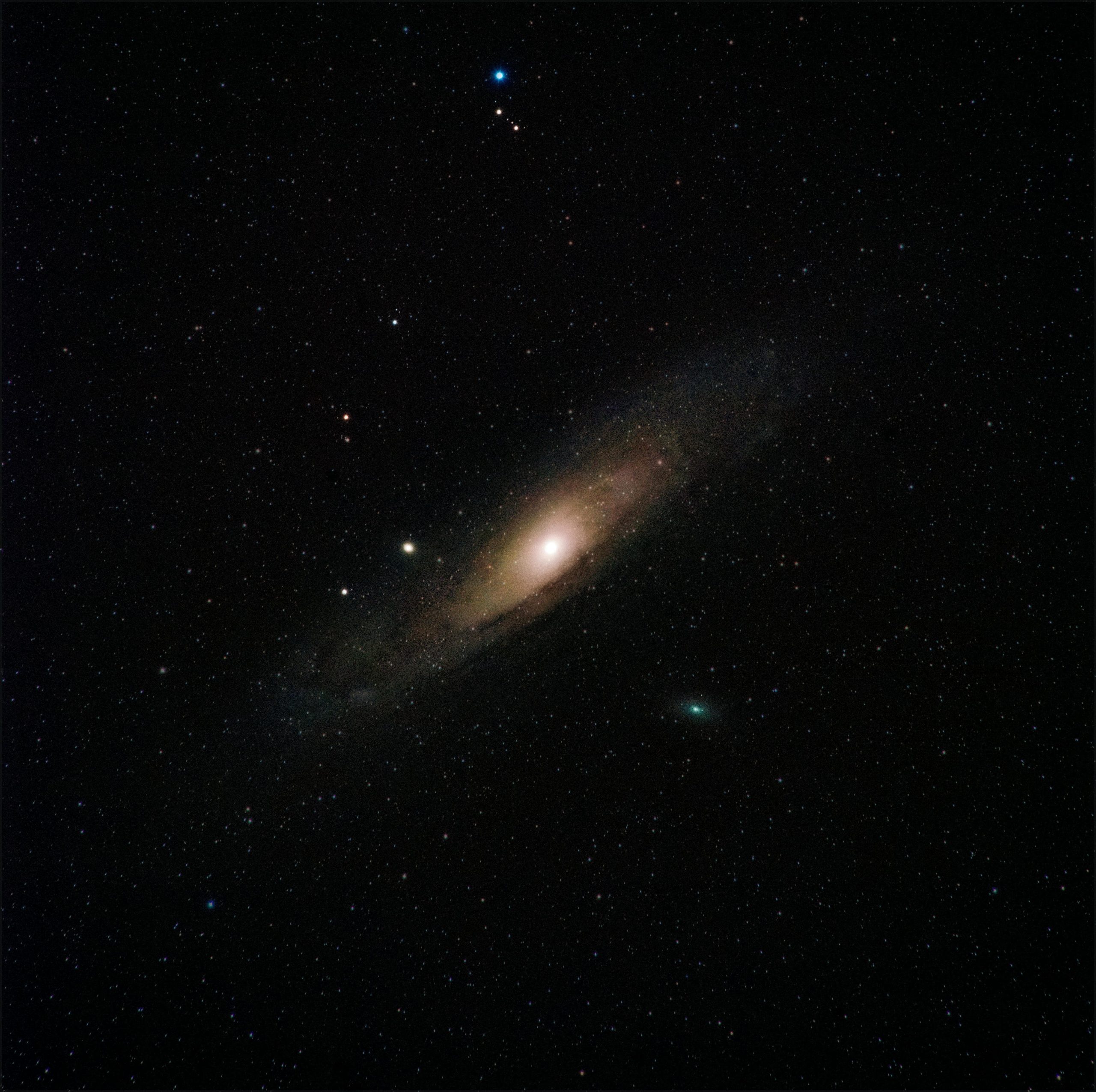
Quasars Unleashed: Astonishing Brightness Revealed
Welcome, fellow space enthusiasts, to a mind-boggling journey into the universe of quasars! Prepare to have your socks knocked off as we explore the unimaginable brightness and astonishing characteristics of these celestial wonders.
But first, let’s get acquainted with what quasars actually are and how they were discovered.
Quasars, short for quasi-stellar radio sources (yep, they’re so special they needed an abbreviation), are captivating objects found in the vast depths of space.
They resemble stars but have a brightness that can outshine entire galaxies. Impressive, right? But hold on to your telescopes, because we’re just getting started.
Definition of Quasars:
Quasars are powered by supermassive black holes lurking at their centers like cosmic mischief-makers. These black holes have an insatiable appetite for cosmic matter, and as it gets sucked in, it releases an extraordinary amount of energy. Quasars are born, shining like cosmic beacons across the universe.
Discovery of Quasars:
Back in the swinging 1960s, astronomers stumbled upon what they thought were ordinary stars. Little did they know, they had discovered something far more intriguing.
These “radio stars” turned out to be quasars, challenging the scientific community’s understanding of the universe. Since then, our knowledge of these celestial oddities has grown exponentially.
We’re about to dive into the characteristics of quasars that will leave you in awe of the cosmic wonders that surround us.
What are Quasars?
Let’s start with the definition of quasars. Quasars, short for “quasi-stellar radio sources,” are some of the most powerful and distant objects in the known universe.
They belong to a class of celestial objects known as active galactic nuclei (AGNs), which basically means they’re like the rockstars of the galactic world.
Now, hold on to your hats because things are about to get even more interesting. Quasars were first discovered back in the 1960s, and let me tell you, it was quite a revelation. Astronomers were baffled by these incredibly bright sources of energy that seemed to be coming from the depths of space.
Since their discovery, scientists have been on a mission to understand the nature of these cosmic powerhouses. Quasars are essentially stellar nurseries on steroids, where intense bursts of star formation occur.
Quasars are also home to supermassive black holes. These black holes are like the divas of the celestial world, devouring anything that comes too close to them.
And as matter spirals into these voracious beasts, it releases unimaginable amounts of energy, creating what we perceive as the astonishing brightness of quasars.
Now, brace yourself for another mind-bending fact. Quasars have these crazy jet streams of energy shooting out from their centers at nearly the speed of light.
But what actually unleashes the astonishing brightness of quasars? Well, let me break it down for you. One of the main factors is something called energetic accretion disks. Essentially, these are swirling discs of gas and dust that surround the supermassive black holes at the core of quasars.
As matter falls into these disks, it rubs against itself, creating friction and releasing a tremendous amount of energy.
But there’s more to the story. You see, quasars also benefit from a phenomenon called Doppler boosting. It’s like the cosmic version of going viral. As the energetic jet streams shoot out from the quasar’s center, their motion can cause the light to become amplified.
And if that wasn’t enough, there’s something called relativistic beaming involved too. This is where the orientation of the quasar’s jet streams and our line of sight come into play. When aligned just right, the jet streams appear even brighter to us because they are beamed towards us.
Whew, that was a lot to take in, right? We’ve only scratched the surface of the mind-blowing power of quasars, but I hope I’ve given you a taste of their awesomeness. Next up, we’ll delve into their jaw-dropping energy output, mind-boggling luminosity, and how they stack up against galaxies.
Characteristics of Quasars
Now that we’ve dipped our toes into the cosmic ocean of quasars, let’s dive a little deeper and explore the characteristics that make these celestial objects more fascinating than knowing the answer to the ultimate question of life, the universe, and everything.
Stellar Nurseries
These cosmic nurseries, known as stellar nurseries, are where gas and dust come together in a celestial game of hanky-panky, giving birth to new stars. Quasars, with their uncanny ability to outshine galaxies, emerge from these interstellar maternity wards like megawatt supernovas.
Supermassive Black Holes
Now, you may think black holes are all doom and gloom, forever swallowing everything in their path. But quasars are here to challenge your preconceived notions!
At their very cores, quasars harbor supermassive black holes that have voracious appetites. These gargantuan cosmic vacuum cleaners guzzle down matter and release tremendous amounts of energy in the process.
Jet Streams of Energy
As matters of cosmic destiny bring more and more matter into the clutches of supermassive black holes, they create enormous accretion disks swirling around them. Think of these disks as a fancy energy smoothie, chock-full of particles moving at near-light speeds.
The intense electromagnetic fields in these disks launch colossal jets of energy, shooting out in opposite directions like cosmic super soakers. These jet streams of energy can extend for thousands of light-years, emitting enough radiance to make even the sun feel inadequate.
So, there you have it—the characteristics that make quasars stand out like a supernova in a crowd of regular stars. These celestial powerhouses not only give birth to galaxies but also quench their insatiable thirst for energy.
Time and again, they prove that in the cosmic theatre, there’s no such thing as understating your brilliance.
Unleashing the Astonishing Brightness
Oh, hello there! You’ve made it to the juiciest part of our cosmic adventure: the mind-bendingly bright world of quasars. Brace yourself, my friend, because these celestial powerhouses are about to blow your mind!
Energetic Accretion Disks
Let’s talk about one of the hottest trends in quasar fashion – the energetic accretion disk. Picture this: a supermassive black hole surrounded by a swirling disk of gas and dust.
As matter spirals into the black hole, it heats up and emits an insane amount of energy. This energy lights up the universe like a disco ball on steroids. Woah!
Doppler Boosting
Imagine you’re standing at a train station, watching a speeding train go by. As the train barrels towards you, the sound it makes gets louder and higher-pitched. This is called the Doppler effect, and guess what? The same thing happens with quasars!
When a quasar shoots out powerful jets of energy, the particles in the jet move at near light-speed. As a result, the light emitted from these jets gets boosted, just like the volume of that train passing by. Cue the cosmic rock concert!
Relativistic Beaming
Prepare to have your mind bent by some Einsteinian magic. When quasar jets are pointed directly towards us, they appear brighter and more intense. It’s like they’re showing off their best side!
This phenomenon is known as relativistic beaming, and it happens because of the weird and wonderful effects of special relativity. So next time you meet a quasar at a cosmic cocktail party, make sure you’re on their good side.
Okay, let’s take a breather here. I hope you’re still with me because things are about to get even more mind-blowing. Quasars are the superheroes of the cosmos, flexing their might in ways you couldn’t even fathom.
Energy Output
Picture this: a quasar can emit more energy than an entire galaxy. Yes, you read that right. An ENTIRE galaxy. That’s like one person outshining an entire Billboard Music Awards show. Talk about stealing the spotlight! It’s mind-boggling to think about the sheer power and force these bad boys possess.
Luminosity
Quasars are brighter than a thousand shining suns combined. Their luminosity can outshine anything else in the universe. If quasars had Instagram accounts, they would amass millions of followers instantly, claiming the title of “Ultimate Celestial Influencer.” And let’s be honest, even the best selfie you’ve ever taken is no match for a quasar’s dazzling glow.
Intensity Compared to Galaxies
Imagine that galaxies are the ordinary house lamps of the universe. Quasars, on the other hand, are the mind-blowing fireworks that light up the night sky on New Year’s Eve. They are like rockstars that make galaxies look like mere background dancers.
So, if you ever feel like your life is lacking a little pizzazz, just remember that quasars are out there, stealing the show in cosmic style.
Now, let’s take a moment to catch our breath. Inhale. Exhale. Quasars are truly the rockstars of the cosmos, unleashing their astonishing brightness upon the universe. But wait, there’s more!
Quasars also play a crucial role in cosmology, helping us understand the grand tapestry of the cosmos.
Cosmic Evolution
By studying quasars, scientists can trace the evolution of galaxies and the universe itself. Quasars act as cosmic breadcrumbs, guiding us through the story of how galaxies form and grow over time. They’re like the history books of the universe, revealing secrets that were once hidden in the depths of space.
Quasars as Distance Indicators
Quasars are not only dazzling, but they’re also incredibly useful. Because we know how bright they should be based on their energy output, we can use them as distance indicators in the vastness of space. It’s like having a cosmic measuring tape to map out the universe.
Well, it’s time to wrap up our journey through the mind-bending world of quasars. We’ve ventured through the blinding brightness, marveled at the sheer intensity, and uncovered the cosmic secrets they hold.
Quasars are like the shooting stars of the universe, blazing a trail of wonder and fascination. So next time you look up at the night sky, take a moment to appreciate these celestial rockstars and the light they bring to our cosmic stage.
The Mind-Blowing Power of Quasars
Now, let’s talk about energy output. I can picture it now – quasars flexing their cosmic muscles and showing off their immense power. These bad boys emit mind-boggling amounts of energy. We’re talking about enough energy to power an entire galaxy, and then some.
It’s like watching a cosmic fireworks display, except instead of ordinary fireworks, we have explosions of unimaginable energy bursting forth from these magnificent quasars.
And let’s not forget about luminosity. Quasars are the dazzling divas of the cosmic stage. They outshine everything else in the universe, including galaxies. It’s like having a superstar in your neighborhood – no one can ignore their blinding brilliance.
Quasars are luminosity on steroids, shining so bright that even their distant twinkling can be observed from billions of light-years away.
Now, let’s compare the intensity of quasars to galaxies. We all know how impressive galaxies can be with their swirling spiral arms and mesmerizing beauty. But quasars? They take the intensity to a whole new level. It’s like comparing a gentle summer breeze to a full-blown tornado.
Quasars are the cosmic equivalent of a supernova on steroids, packing a punch that leaves galaxies shaking in their celestial boots. They are the rock stars of the universe, the high-voltage powerhouses that command attention with their sheer intensity.
Quasars are not just showstoppers in the cosmic theater; they also have a role to play in the grand scheme of cosmology. Their energy output and luminosity provide valuable insights into cosmic evolution.
By studying quasars, astronomers can unravel the mysteries of how galaxies and supermassive black holes form and evolve over time.
Quasars also serve as distance indicators, helping us measure the vast expanse of the universe and understand its structure better. They are like the cosmic mile markers that guide us on our journey through the cosmos.
So, there you have it, fellow space enthusiasts. Quasars, with their mind-blowing energy output, blinding luminosity, and intensity that outshines galaxies, are the true powerhouses of the universe.
They captivate us with their awe-inspiring brightness and offer tantalizing glimpses into the mysteries of our cosmic neighborhood.
So, next time you look up at the night sky, take a moment to appreciate these celestial wonders and let their astonishing power ignite your curiosity about the vast expanse of our universe.
The Role of Quasars in Cosmology
Quasars, are those captivating celestial objects that continue to leave scientists scratching their heads.
These enigmatic entities have become a cornerstone of cosmology, shedding light on the mysteries of our vast universe. So, what role do quasars play in the grand scheme of cosmology? Let’s dive in and find out.
Cosmic Evolution
One of the key contributions of quasars lies in their ability to provide insights into cosmic evolution. By studying the properties and behavior of quasars at different distances, scientists can trace the evolution of galaxies and the universe itself.
These powerful objects offer a window into the past, allowing us to observe galaxies in their early stages when they were more active, and to better understand how they have evolved over billions of years. It’s like taking a trip back in time but without the need for a DeLorean or a flux capacitor.
Frequently Asked Questions
1. What exactly is a quasar, and why are they so bright?
Quasars, short for “quasi-stellar radio sources,” are incredibly luminous and energetic celestial objects. They’re powered by supermassive black holes at the centers of distant galaxies, which emit intense radiation as they consume surrounding matter. This process creates the incredible brightness associated with quasars.
2. How bright can quasars get compared to other objects in the universe?
Quasars are among the brightest objects in the universe. They can outshine entire galaxies, including the stars within them. Some quasars emit more light than a thousand galaxies combined, making them standout features in the night sky.
3. Do quasars have any impact on our understanding of the cosmos?
Absolutely. Quasars have played a crucial role in our understanding of the early universe. Their extreme brightness allows astronomers to study the universe’s distant past, providing insights into cosmic evolution, galaxy formation, and the conditions shortly after the Big Bang.
4. Can quasars be observed from Earth with the naked eye?
No, quasars are typically too distant and faint to be seen without powerful telescopes. They appear as tiny points of light in the night sky and are mainly studied by astronomers using specialized equipment.
5. Are there any interesting or shocking facts about quasars that people might not know?
Certainly! One surprising fact is that some quasars can emit jets of particles and energy that extend for millions of light-years, far beyond their host galaxies. Also, the light from quasars can be gravitationally lensed by massive objects, such as galaxies, creating multiple images of the same quasar in the sky. These phenomena continue to intrigue scientists and stargazers alike.
Conclusion
We’ve come to the end of this mind-boggling journey through the astonishing world of quasars. Let’s quickly recap the key points we’ve covered without wasting any more of your precious time.
Quasars are fascinating celestial objects found in the depths of space. They were discovered back in the 1960s and have been capturing the attention of astronomers ever since. These beastly bright sources of energy are powered by supermassive black holes at their cores.
The madness doesn’t stop there; quasars also boast energetic accretion disks. These disks are like cosmic buffets, gorging on surrounding matter and releasing mind-blowing amounts of light and energy in the process.
We have the famous Doppler boosting phenomenon, where quasars unleash even more brightness by virtue of their jet streams pointing toward lucky observers.
And let’s not forget about relativistic beaming. These quasars are so cool that their intense brightness is further amplified due to their high-speed jets of particles pointed directly at us
Now, you might be wondering, just how intense are these quasars compared to galaxies? Well, hold onto your space helmets because the energy output of a single quasar can outshine an entire galaxy! Yup, quasars sure know how to steal the spotlight.
In the grand scheme of cosmology, quasars play a crucial role in understanding cosmic evolution.
They provide valuable insights into the early stages of the universe and can even serve as distance indicators for those astronomically inclined folks out there.
So, there you have it, folks! Quasars, are the dazzling behemoths of the universe, revealing their astonishing brightness and captivating our cosmic curiosity.
Next time you gaze up at the night sky, take a moment to appreciate these celestial showstoppers because they truly are the rock stars of the cosmos.
Thanks for joining us on this exciting astronomical adventure! Now, go out there and spread the quasar love! Who knows, maybe you’ll even become a quasar enthusiast yourself. Keep exploring and keep reaching for the stars!




Discussion about this post