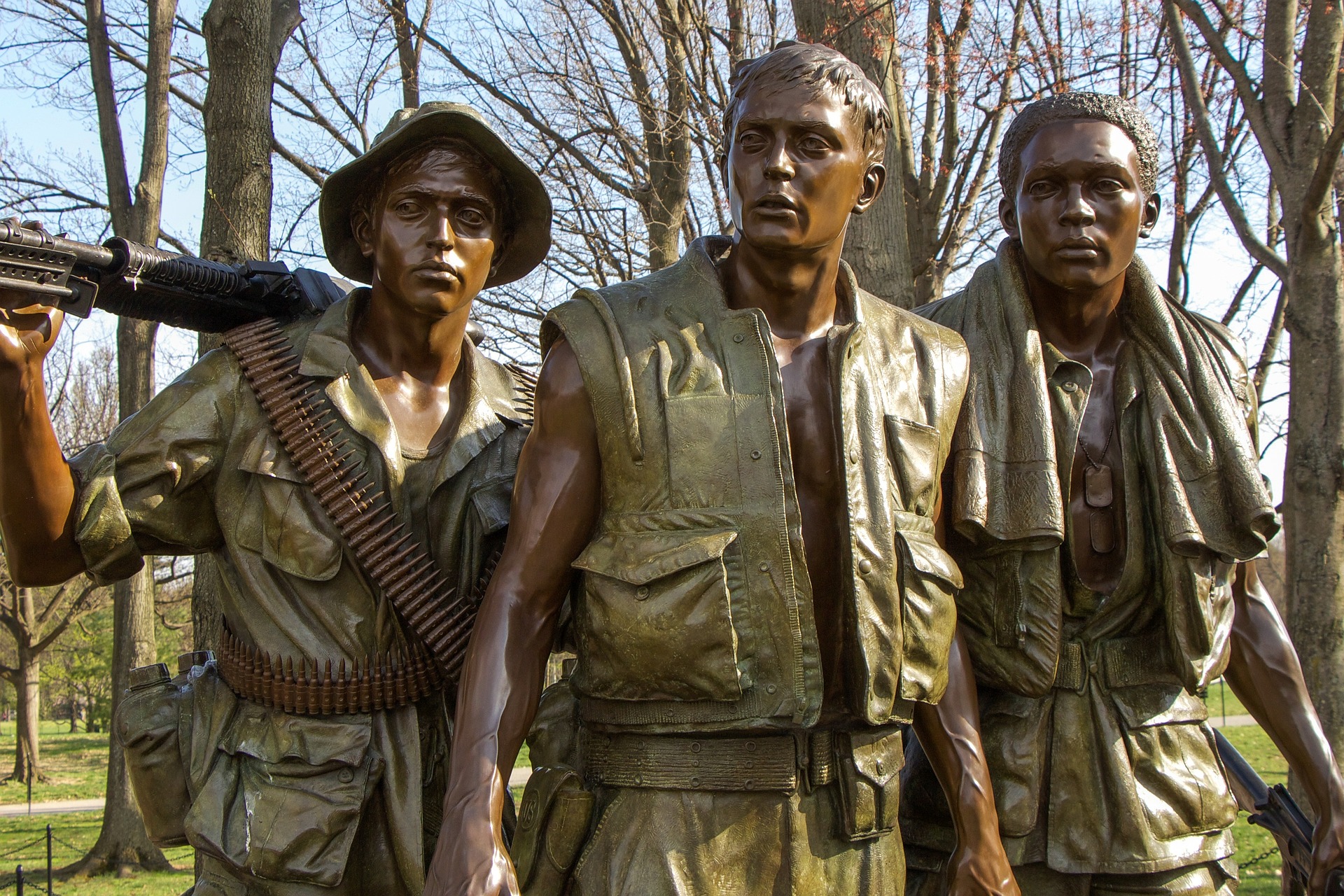
Examining the US Failure in the War Vietnam
The United States’ involvement in War Vietnam began in the 1950s, with its support for the French colonial forces fighting against Vietnamese nationalists.
Following the French defeat at Dien Bien Phu in 1954, the Geneva Accords divided Vietnam into two separate entities: North Vietnam, led by Ho Chi Minh and the communist Viet Minh, and South Vietnam, led by Ngo Dinh Diem and supported by the United States.
The objective of the United States was to prevent the spread of communism in Southeast Asia and uphold the doctrine of containment.
However, the American government underestimated the resilience and determination of the North Vietnamese and the Viet Cong, a communist guerilla force operating in South Vietnam.
Background of the War Vietnam
The War Vietnam, ah, what a mess that was! Let’s delve into the background of this colossal failure and try to make sense of it all – or at least have a good laugh along the way. So, picture this: It’s the 1960s, and the United States (cue dramatic music) was all hyped up to intervene in the War Vietnam.
The war had its roots in the Cold War, where the U.S. was determined to contain the spread of communism. But as we know now, they couldn’t exactly stick the landing on this one. First things first, there was a clear misunderstanding of the enemy. The U.S. thought they were up against a bunch of disorganized, rice-farming peasants.
Little did they know that the Viet Cong and their guerilla warfare tactics were no joke. Turns out, they weren’t just another walk in the park for the U.S. military. To add to the mess, the U.S. lacked clear objectives. It’s like going into battle without any idea of what you actually want to achieve.
That makes sense, right? Well, not really. This lack of direction led to confusion and a whole lot of wasted resources. But wait, there’s more! Back home, political turmoil was brewing.
Protests against the war were widespread, and it seemed like every second person was questioning the government’s decisions. It’s hard to fight a war when your own country is divided and questioning your every move. Now, let’s talk about the failure of counterinsurgency strategies. The U.S. tried to win the hearts and minds of the Vietnamese people, but guess what?
Dropping bombs on them didn’t exactly endear the U.S. to the locals. Shocking, I know. It’s safe to say that they missed the mark on this one. Finally, the grand finale – disengagement and withdrawal. After years of bloodshed and mounting casualties, the U.S. threw in the towel and called it a day.
They say quitting is for losers, but maybe in this case, it was the only option. So long, Vietnam! In a nutshell, the United States failed in the War Vietnam due to a multitude of reasons – the misunderstanding of the enemy, the lack of clear objectives, the political turmoil at home, the underestimation of guerilla warfare, the failure in counterinsurgency strategies, and ultimately, the disengagement and withdrawal.
It was a perfect storm of incompetence and poor decision-making. But hey, let’s not dwell on the negatives for too long. After all, war isn’t exactly known for its success stories, right?
Misunderstanding of the Enemy
Ah, the classic case of “Oh, we totally get your perspective…or maybe not?” The United States seemed to have a knack for this when it came to the War Vietnam.
They misunderstand the enemy more than a teenager misunderstands their parent’s music tastes. And let me tell you, that’s a whole new level of misunderstanding. First of all, the U.S. failed to grasp the deep-rooted nationalism and determination of the Vietnamese people. They thought they could waltz in, drop some bombs, and call it a day.
But oh boy, were they in for a surprise. The Vietnamese had a little something called “home-field advantage” and they weren’t about to let go of their land without a fierce fight. But did the U.S. government realize this? Nope. They were too busy scratching their heads and wondering why the Vietnamese wouldn’t just throw in the towel.
Maybe they were too distracted by the psychedelic colours of the 60s to see the writing on the wall. Not only did they misunderstand the enemy’s resolve, but they also failed to grasp the nature of guerrilla warfare.
It’s like going to a chess tournament thinking you’re playing checkers. The U.S. military was all about conventional warfare, you know, big guns, tanks, and flashy uniforms. But the Vietnamese had a different playbook. They mastered the art of blending in with the local population, disappearing into the dense jungles, and striking when least expected.
It was like a real-life game of hide-and-seek, except with bullets. And let’s just say the U.S. strategy of “find and destroy” wasn’t quite cutting it. To make matters worse, the U.S. lacked a clear objective. It was like they were wandering blindfolded through a maze, hoping to stumble upon a victory.
They couldn’t decide whether they were fighting to prevent the spread of communism or to protect their national pride. Hint: You can’t have it both ways. So here they were, knee-deep in political turmoil at home, underestimating their enemy’s tenacity, and lacking a clear plan of attack.
It was a recipe for disaster, a perfect storm of poor decisions and a severe lack of understanding. And as they say, hindsight is 20/20. But I guess during the war, they were too busy squinting to see the obvious.
But hey, at least we learned some valuable lessons from this debacle. Like never underestimate your opponent, always have a clear objective, and for goodness sake, don’t play checkers at a chess tournament.
So, in the end, while the U.S. may have failed in the War Vietnam, they definitely succeeded in teaching us what not to do. Thanks for the life lessons, guys.
Lack of Clear Objectives
So, the United States decided to waltz into the War Vietnam without any clear objectives. How clever!
Instead of mapping out a strategic plan, they thought it would be fun to go in blindfolded. Talk about a recipe for disaster! Without clear objectives, the military was shooting in the dark (both figuratively and literally).
They didn’t know what they were trying to achieve, other than preventing the spread of communism. Oh, the irony! Because we all know how well that worked out in the end. With no concrete goals, the US troops were left wandering around the jungles of Vietnam, hoping to stumble upon some sort of victory.
Maybe they thought a shiny victory would just fall into their laps, like a gift from the heavens. But sadly, the skies remained empty, and so did their plans for success. The lack of clear objectives led to confusion and a whole lot of frustration. It’s like trying to navigate a maze blindfolded while juggling flaming torches.
Spoiler alert: It doesn’t end well. And surprise, surprise, it didn’t end well in Vietnam either. Without a roadmap, the US troops were left to figure things out as they went along.
Clearly, they didn’t have a GPS, because they ended up going in circles, achieving nothing but a massive headache. So, let this be a lesson to all future generations: having clear objectives is not just a good idea, it’s a freaking necessity.
Otherwise, you’ll find yourself knee-deep in a war with no idea why you’re there or how to win it. Trust me, it’s not a situation you want to find yourself in.
Political Turmoil at Home
Ah, yes, political turmoil. An essential ingredient in any good war recipe. And War Vietnam had a heaping serving of it.
You see, back in the good old US of A, things weren’t exactly peachy during the War Vietnam. It was a time of huge divisions within the country, both politically and socially.
It’s almost as if they were staging their own internal battle while simultaneously trying to fight one on the other side of the world. Talk about multitasking! One of the major reasons the United States failed in the war was due to the intense opposition and protests that erupted on American soil.
People weren’t exactly thrilled about sending their sons off to fight a war in a faraway land that seemed never-ending.
It’s like telling your child to clean their room, only to find out the mess keeps growing exponentially with no hope of ever reaching a tidy state. Frustrating, isn’t it? Well, that’s how a lot of Americans felt. The anti-war movement gained traction, with college campuses becoming hotbeds of dissent. War Vietnam opponents took to the streets in protest, waving signs and chanting slogans.
They were loud, they were passionate, and they were determined to bring an end to the madness. The country was divided, torn between those who believed in the government’s justifications for the war and those who saw it for what it truly was: a never-ending quagmire. But wait, there’s more! The political landscape was also a complete mess.
Presidents came and went like characters in a revolving door, making it difficult to establish a consistent strategy in War Vietnam.
It’s like trying to build a house of cards on a shaky foundation – eventually, it’s going to come crumbling down. And that’s exactly what happened. The shift in public opinion put immense pressure on the politicians, forcing them to reconsider their stance on the war.
It was like playing a never-ending game of musical chairs, with each leader hoping they wouldn’t be the one left standing when the music stopped.
And when the music did stop, the United States ultimately decided to withdraw from War Vietnam, leaving behind a sense of defeat and failure. So, in a nutshell, the political turmoil at home played a significant role in the United States’ failure in the war.
It’s like trying to fight a battle on two fronts – one overseas, and one on your own doorstep. Not exactly a recipe for success, if you ask me. But hey, hindsight is always 20/20, right?
Underestimation of Guerrilla Warfare
In the chaos of the War Vietnam, the United States made the fatal mistake of underestimating the power of guerrilla warfare.
You see, they had this idea that war was all about big battles, tanks, and flashy explosions. But little did they know that their flashy toys were no match for a few determined, resourceful guerrilla fighters. The US military, with its vast resources and superior firepower, decided to take on the Viet Cong, the guerrilla fighters of North Vietnam.
They thought that their advanced technology and overwhelming force would easily crush the enemy. Oh, how wrong they were. The Vietnamese guerrilla fighters were masters of stealth and deception. They blended in with the local population, making it nearly impossible to distinguish friend from foe.
They turned the dense jungles into their playground, using the terrain to their advantage. They would strike suddenly and then disappear into thin air, leaving the bewildered US soldiers scratching their heads. But instead of adapting to this unconventional style of warfare, the US military stuck to their traditional methods.
They continued to prepare for large-scale battles, neglecting the fact that the enemy was just a stone’s throw away, hidden in plain sight.
While the US soldiers were busy searching for the enemy in the wrong places, the Viet Cong were launching deadly ambushes and hitting them where it hurt the most. To make matters worse, the US soldiers were like fish out of water when it came to the Vietnamese language, culture, and customs. They simply couldn’t relate to the local people, and their attempts to win hearts and minds fell flat.
The Viet Cong, on the other hand, had the full support of the local population. They were seen as liberators, fighting to protect their homeland from foreign invaders. So the US soldiers found themselves fighting a losing battle against a highly motivated and well-supported enemy.
They were stuck in a never-ending loop of frustration and confusion, wondering why their superior firepower couldn’t bring them victory. The answer was simple: they underestimated the power of guerrilla warfare. In the end, the United States failed in the War Vietnam because they failed to understand the nature of the enemy they were up against.
They failed to adapt to the realities of guerrilla warfare and instead fought a traditional war against an unconventional enemy.
And that, my friend, is a lesson that we should never forget – never underestimate the power of a few determined guerrilla fighters.
Failure in Counterinsurgency Strategies
The United States thought they had this one in the bag. They had all the fancy tactics and cutting-edge technology.
They were confident that they could swoop in, suppress the enemy, and come out victorious in War Vietnam. But as we all know, things didn’t quite go according to plan. First off, let’s talk about the infamous “search and destroy” strategy. The idea behind this brilliant plan was simple – find the enemy, obliterate them, and then call it a day. It sounded like a foolproof plan, right? Wrong.
The problem was that the enemy, the Viet Cong, was like a pesky mosquito buzzing around, always ready to strike and then disappear into thin air.
So while the US soldiers were busy searching and destroying, the Viet Cong were busy hiding and regrouping. It was like a never-ending game of hide-and-seek, and guess who kept losing?
Yeah, you guessed it right. Then there were the famous “free-fire zones.” Now, doesn’t that sound delightful? A place where you can just shoot at anything that moves without worrying about the consequences.
Well, maybe it would have been delightful if the enemy had kindly agreed to wear neon signs saying, “Hey, shoot at us!” But unfortunately, they didn’t. So what happened?
Innocent civilians, who were just going about their daily lives, ended up paying the price. Turns out, indiscriminate shooting doesn’t exactly win hearts and minds. Who would have thought?
And let’s not forget the much-hyped “strategic hamlets.” Ah, strategic hamlets, the American answer to the Viet Cong’s underground tunnel systems.
The idea was to relocate villagers into fortified hamlets where they could be closely monitored and protected. Because, you know, who wouldn’t love being forcibly uprooted from their homes and crammed into a new place with a bunch of strangers?
Predictably, the villagers weren’t exactly thrilled about this brilliant plan. Surprise, surprise! But perhaps the biggest failure in the counterinsurgency strategies was the lack of understanding of the enemy. The United States underestimated the power of a guerrilla force.
They failed to recognize that they were fighting an ideology, not just a group of individuals. The Viet Cong were deeply rooted in the local population, and they had the support and sympathy of many Vietnamese people.
No matter how many bombs were dropped or how many villages were destroyed, the spirit of resistance remained strong. So, my dear readers, the failure in counterinsurgency strategies boils down to this – arrogance and a failure to adapt.
The United States approached the War Vietnam with a superiority complex and a belief that they could impose their will upon a determined enemy. But history has shown us time and time again that no amount of firepower can extinguish the flame of determination.
So, as we move forward, let’s remember the lessons from the United States’ failure in Vietnam and strive for a better understanding of our adversaries. Because when it comes to warfare, ignorance is definitely not bliss.
Disengagement and Withdrawal
Ah, the ever-awaited disengagement and withdrawal. It’s like leaving a party before they start serving cake. In the case of the United States’ War Vietnam, it was a rather messy affair.
After years of pouring resources, manpower, and mental energy into a war that seemed to have no end in sight, the U.S. finally decided it was time to pack up and go home.
And who could blame them? Vietnam had become quite the headache with no signs of Advil in sight. But why did they decide to disengage? Well, for starters, the American public was growing increasingly tired of the war.
Imagine being in a never-ending game of Monopoly, but instead of earning money, you’re losing lives. It’s not exactly a crowd-pleaser. Public opinions aside, there were other factors at play too. The U.S. realized they had underestimated the resilience and determination of the North Vietnamese and Viet Cong forces.
It’s like they were playing hide-and-seek, but instead of finding one person, they were trying to locate a whole army. Talk about a challenge. Furthermore, the military strategies employed by the U.S. just weren’t cutting it. It’s like trying to do calculus with a calculator that only knows how to add and subtract.
They lacked effective counterinsurgency strategies and failed to adapt to the unpredictable nature of guerrilla warfare. You have to give credit to the Viet Cong for staying one step ahead. So, with public pressure, military setbacks, and a general sense of exhaustion, the U.S. began its withdrawal from Vietnam.
It was like saying goodbye to an annoying neighbour who always borrowed your lawn mower and never returned it. Good riddance!
In the end, the United States’ failure in the War Vietnam can be attributed to a combination of factors: misunderstanding the enemy, lacking clear objectives, political turmoil at home, underestimating guerrilla warfare, and unsuccessful counterinsurgency strategies.
But hey, we live and we learn. Hopefully, we can take these lessons and apply them to future endeavours. And if not, at least we have some hilarious stories to tell at parties.
Frequently Asked Questions
What were the primary reasons for the United States’ involvement in the War Vietnam?
Explain the historical context and the factors that led to U.S. involvement, including the containment policy, fears of the spread of communism, and Cold War dynamics.
What is often cited as the main reasons for the United States’ failure in the War Vietnam?
Discuss key factors such as guerrilla warfare tactics employed by the North Vietnamese, the challenges of winning hearts and minds, the lack of a clear exit strategy, and the domestic anti-war protests that contributed to the U.S. withdrawal.
How did the War Vietnam impact both the United States and Vietnam?
Highlight the lasting impacts of the war on both nations, including the loss of lives, economic consequences, and the enduring psychological and social scars it left on soldiers and civilians.
What lessons have been learned from the War Vietnam and its perceived failure?
Discuss how the Vietnam War shaped subsequent U.S. foreign policy decisions, particularly in terms of military interventions and the importance of clear objectives and exit strategies.
Is there ongoing research or debate about the reasons for the United States’ failure in the War Vietnam?
Mention that historians and scholars continue to analyze the War Vietnam, and perspectives on its causes and consequences may evolve over time as new information becomes available and historical context is reassessed.
Conclusion
The War Vietnam was a prime example of how not to win a war.
The United States, with all its military might and resources, managed to fail spectacularly in its mission to defeat the Viet Cong and prevent the spread of communism.
So, what went wrong? Let’s take a look at the key reasons behind this epic failure. Firstly, there was a severe lack of understanding about the enemy. The United States underestimated the resolve and tenacity of the Viet Cong, who were fighting for their independence from foreign powers.
Instead of recognizing their legitimate grievances, the US viewed them as mere pawns of the communist regime, which led to a dangerous misjudgment. Adding to the debacle was the lack of clear objectives. The US entered the war with no concrete plan or end goal in mind.
This lack of direction not only confused the soldiers on the ground but also made it impossible to measure progress or success.
It’s like going on a road trip without a destination in mind – you just end up driving in circles. Back home, political turmoil further hindered any chances of success. The war sparked intense divisions among the American population, with anti-war protests and social unrest becoming the norm.
This internal disarray weakened the nation’s resolve and distracted from the primary objective of winning the war. It’s impossible to fight a unified war abroad when you can’t even agree on basic principles at home.
Another blunder was the underestimation of guerrilla warfare tactics employed by the Viet Cong. The US was accustomed to conventional warfare, where battles were fought on open fields with fixed objectives.
However, the Viet Cong turned the tables by utilizing hit-and-run tactics, exploiting the dense jungles and tunnel networks, and blending in with the civilian population.
It was a textbook case of David versus Goliath, with the US playing the role of an unsuspecting giant. Furthermore, the failure to implement effective counterinsurgency strategies only added fuel to the fire.
The US tried to win hearts and minds through programs like the Strategic Hamlet Program, but it only ended up alienating the local population.
The inability to adapt and learn from mistakes turned the Vietnamese people against the US forces, making it nearly impossible to gain their trust. Finally, the disengagement and eventual withdrawal of US troops sealed the fate of this failed venture. As the public support for the war dwindled, so did the government’s commitment to its cause.
The hasty withdrawal without a comprehensive plan for post-war stabilization left a power vacuum for the Viet Cong to fill, resulting in the ultimate victory of communism in Vietnam.
In conclusion, the United States failed in the War Vietnam due to a combination of factors: misunderstanding the enemy, lack of clear objectives, political turmoil at home, underestimation of guerrilla warfare, failure in counterinsurgency strategies, and ultimate disengagement and withdrawal.
It serves as a grim reminder of the consequences of arrogance, ignorance, and a lack of strategic planning. Hopefully, we can learn from these mistakes and ensure that history does not repeat itself.
Thank you for joining me on this journey through the failures of the War Vietnam. Happy learning, folks!



Discussion about this post