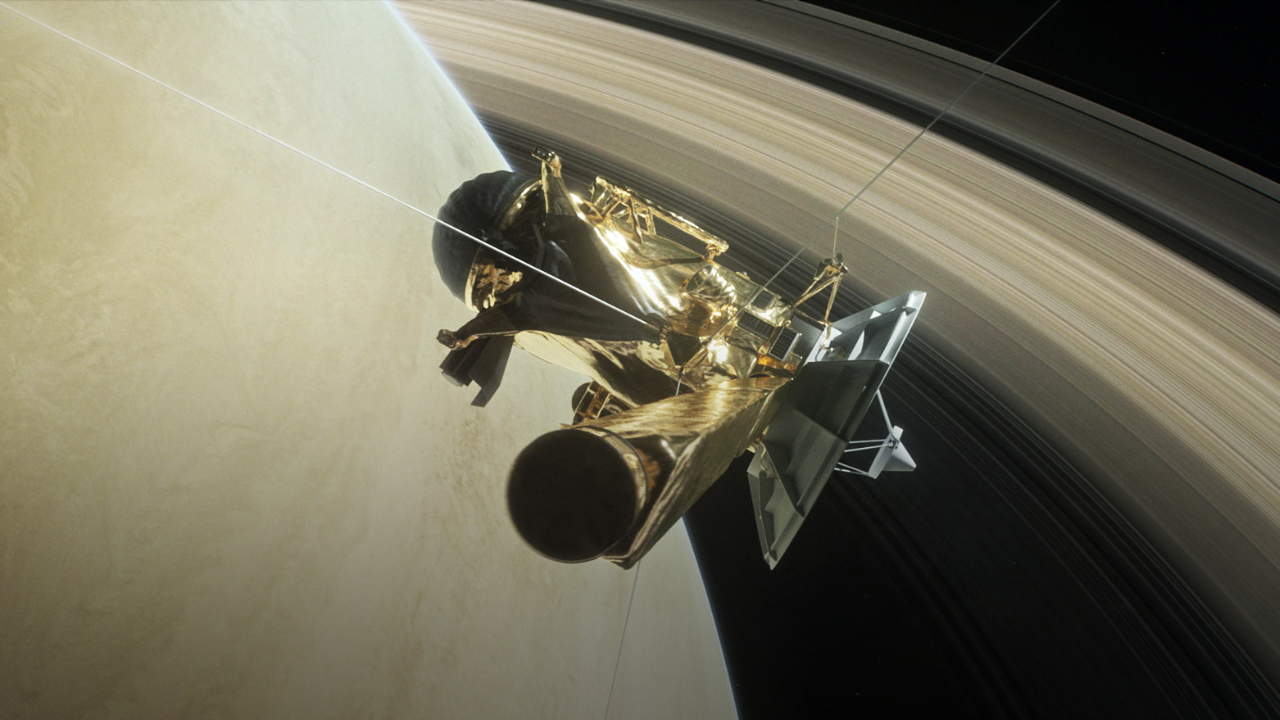
Cassini Spacecraft: Discover the Epic Space Journey Now
The Cassini spacecraft has left an indelible mark on space exploration.
This article will delve into the awe-inspiring journey of this extraordinary spacecraft and unravel the wealth of scientific discoveries it has bestowed upon us during its monumental mission.
From its ambitious launch in 1997 to its triumphant arrival at Saturn in 2004, we explore the Cassini spacecraft’s cutting-edge instruments, breathtaking images of Saturn and its moons, and profound insights into planetary processes.
As you read through this article, be in awe of its extraordinary voyage through space, celebrating the profound significance of Cassini’s role in expanding our understanding of the cosmos.
What Is The Cassini Spacecraft?
The Cassini spacecraft, an extraordinary NASA mission spanning over a decade, has been instrumental in unraveling the mysteries of Saturn and its enchanting icy moons. It was launched on October 15, 1997, and ended on September 15, 2017.
This remarkable spacecraft granted us unprecedented access to breathtaking worlds. It unveiled methane rivers flowing into vast methane seas and erupting jets of ice and gas from a potential liquid water ocean that could harbor the building blocks of life.
As part of its mission, the Cassini Spacecraft also carried with it 12 instruments including radar, imaging cameras, magnetometers, and spectrometers.
Where It Got Its Name
The Cassini-Huygens spacecraft was named after Dutch scientist Christiaan Huygens (1629-1695) and Italian Jean-Dominique Cassini (1625-1712).
The former discovered Saturn’s rings and its largest moon, Titan, in 1655. The latter, on the other hand, discovered the Saturnian satellites Iapetus, Rhea, Tethys, and Dione.
Cassini also discovered the “Cassini Division” which pertains to the narrow gap that separates Saturn’s rings.
Stopovers
The Cassini spacecraft performed a total of four gravity-assist swing-by maneuvers before reaching Saturn.
These maneuvers occurred at Venus in April 1998 and again in June 1999, followed by one at Earth in August 1999, and another at Jupiter in December 2000.
Towards the end of Cassini’s third orbit around Saturn in December 2004, the Huygens probe was launched on a 22-day cruise to Titan, eventually reaching its destination on January 14, 2005.
How Huge is the Cassini Spacecraft?
Additionally, the Cassini-Huygens spacecraft holds the distinction of being the largest interplanetary spacecraft ever constructed.
It utilized the equivalent of 68,040 kilograms of rocket fuel through gravity assists from two Venus swing-bys and one Earth swing-by during its extensive journey to Saturn.
The Huygens probe, designed to withstand extreme conditions, endured temperatures of up to 18,000°C as it traversed Titan’s dense gas atmosphere.
Titan itself remains a captivating enigma in our Solar System, boasting the status of the second-largest moon with a unique, methane-rich nitrogen atmosphere akin to a very young Earth.
Saturn’s Beautiful Revelation
Revealing the true wonders of Saturn, from its tumultuous storms to the delicate ballet of gravitational forces, Cassini’s detailed observations enriched our understanding of this colossal planet.
Additionally, Cassini carried the European Huygens probe, making it the first human-made object to land on an outer solar system world.
Despite its 20-year journey, with 13 years dedicated to exploring Saturn, the mission finally concluded with a daring final mission to protect potential life-supporting moons by plunging into Saturn’s atmosphere, returning valuable scientific data until its very last moments.
The Cassini spacecraft’s significance to space exploration lies in its transformative contributions to our knowledge of Saturn and its celestial wonders.
Exploration of Saturn
The Cassini spacecraft, also known as Cassini-Huygens, was a groundbreaking mission that provided a wealth of knowledge about Saturn and its surrounding environment.
It became the first spacecraft to orbit Saturn and accomplish a successful landing in the outer solar system. Additionally, it made history by sampling an extraterrestrial ocean.
Throughout its extensive mission, Cassini expanded our understanding of potentially habitable worlds and revealed Titan as one of the most Earth-like worlds encountered, shedding light on our own planet’s history.
Acting like a time machine, Cassini offered insights into the processes that shaped the development of our solar system.
The mission’s longevity allowed us to observe weather and seasonal changes on another planet. It also revealed Saturn’s diverse moons and unveiled their unique stories.
Significant Statistics
Moreover, Cassini’s observations of Saturn’s rings exposed their complexity and dramatic internal processes, challenging scientists to reevaluate their understanding of the solar system.
Cassini’s accomplishments represented an incredible achievement of human and technical complexity, and it inspired wonder as it uncovered the beauty of Saturn, its rings, and its moons.
With 2.5 million commands executed, 4.9 billion miles traveled since launch, 635 GB of science data collected, and 4,000 science papers published, Cassini’s impact on space exploration cannot be overstated.
A total of 6 named moons were discovered, 294 orbits were completed, 162 targeted flybys of Saturn’s moons were executed, and 453,048 images were taken.
The mission involved participation from 27 nations, showcasing the collaborative effort behind this monumental endeavor.
Related articles:
- The Mysterious Rings of Saturn: What are They Made of, and How Do They Work?
- Planets of Rings – What Planets Have Rings?
The Team
The Cassini spacecraft program is a remarkable international collaboration involving NASA, the European Space Agency (ESA), the Italian space agency (ASI), and various European academic and industrial contributors.
This partnership is essential, as the scale and cost of the mission would be challenging for any single nation to bear alone.
Instead, through shared investment and participation, this global effort has become possible.
Over 260 scientists from 17 countries are actively engaged in the Cassini mission, driven by a common goal to deepen our understanding of Saturn, its mesmerizing rings, captivating moons, and enigmatic magnetosphere.
Managing the mission for NASA’s Office of Space Science is the Jet Propulsion Laboratory (JPL) in Pasadena, CA, with Earl Maize as the Cassini program manager and Linda J. Spilker as the Cassini project scientist.
At NASA Headquarters, Bill Knopf serves as the Cassini program executive, while Curt Niebur fulfills the role of Cassini program scientist.
Lockheed Martin, a major U.S. contractor, played a pivotal role by contributing essential components such as the launch vehicle and upper stage, spacecraft propulsion module, and radioisotope thermoelectric generators.
The development of the Huygens Titan probe was overseen by the European Space Technology and Research Center, with the prime contractor, Aerospatiale (now Alcatel) in Cannes, France, assembling the probe using equipment from multiple European countries.
Interestingly, the United States provided Huygens batteries and two scientific instruments.
At ESA and ASI, key individuals like Nicolas Altobelli (ESA) and Enrico Flamini (ASI) are actively involved, leading projects related to the spacecraft’s scientific instruments and radio antenna, respectively.
Additionally, the U.S. Department of Energy played a vital role by providing Cassini’s radioisotope thermoelectric generators, essential for the spacecraft’s power supply throughout its mission.
This exceptional collective effort highlights the significance of international cooperation in space exploration and the Cassini spacecraft’s truly global impact.
Epic End
The Cassini spacecraft’s mission culminated in a deliberate and controlled descent into Saturn’s atmosphere on September 15, 2017. It marked the end of its nearly two-decade-long exploration.
This decision was made to prevent any potential biological contamination of Saturn’s moons, some of which are now believed to harbor conditions suitable for life.
Various factors influenced the chosen method for ending the mission, including the amount of remaining rocket fuel, the spacecraft’s overall health, and the availability of funding for ongoing operations from Earth.
As the mission approached its conclusion, several possibilities were considered for Cassini’s later stages.
These included options such as aerobraking into orbit around Titan, departing from the Saturn system, or altering its orbit through close approaches. Another potential option involved collecting solar wind data while in a heliocentric orbit.
In the end, the decision was made to safely and intentionally end the mission by sending the Cassini spacecraft into Saturn’s atmosphere, allowing it to transmit valuable scientific data until its final moments.
“Grand Finale”
The “Grand Finale” of the Cassini spacecraft was orchestrated with careful planning and budget considerations.
In July 2014, the Cassini science team named the proximal orbits of the probe the “Grand Finale,” which involved gradually shifting its inclination and then followed by a daring dive into Saturn’s atmosphere.
However, securing funding for the Grand Finale posed a challenge, leading to budgetary drama in 2013-2014.
Eventually, the U.S. government approved the Grand Finale at a cost of $200 million, which proved to be a more cost-effective alternative to launching two separate Discovery Program-class missions.
During the Grand Finale, scientific data was gathered using eight of the spacecraft’s twelve science instruments.
As the probe plunged into Saturn’s atmosphere, imaging was no longer possible due to data rate limitations.
All pictures were transmitted back to Earth, and the cameras were switched off before the final plunge began.
Cassini’s last transmissions were received by the Canberra Deep Space Communication Complex in Australia.
This marked a poignant moment for the dedicated scientists who had been involved in the mission for many years.
The spacecraft’s demise occurred shortly after the final transmissions, and NASA’s video coverage of the event received an Emmy for “Outstanding Original Interactive Program,” commemorating the historic end of the Cassini mission.
What’s Next?
After the Cassini spacecraft’s remarkable exploration, its impact on future space missions has been profound.
One of the most significant revelations was Cassini’s discovery that Enceladus possesses all the essential elements for life, sparking a renewed focus on investigating “ocean worlds” across planetary science.
Building on the lessons learned from Cassini’s mission, NASA is gearing up for its Europa Clipper mission, scheduled for launch in the 2020s. Europa Clipper aims to conduct numerous flybys of Jupiter’s intriguing ocean moon, delving into its potential habitability.
The mission’s orbital tour design draws inspiration from Cassini’s successful exploration of Saturn.
As the journey continues farther into the solar system, scientists have long aspired to explore Uranus and Neptune more extensively.
These ice giant planets have been visited briefly by only one spacecraft each (Voyager 2 in 1986 and 1989, respectively).
Now, a recently completed study delivered to NASA in preparation for the next Decadal Survey examines various potential mission concepts, including orbiters, flybys, and probes that could plunge into Uranus’ atmosphere to study its composition.
Future missions to these ice giants may embrace an approach akin to Cassini’s mission, opening up new frontiers of discovery in the outer reaches of our cosmic neighborhood.
Frequently Asked Questions
What did the scientists do with all the data they received from the Cassini space mission?
Scientists meticulously analyzed and studied all the data collected from the Cassini space mission. They examined Saturn’s rings, moons, atmosphere, and magnetosphere, uncovering new insights into planetary processes and potential habitable environments. The data has led to numerous research papers and publications, advancing our understanding of Saturn and its cosmic neighborhood.
Why did the Cassini spacecraft have to circle first multiple times before crashing on Saturn?
The Cassini spacecraft circled Saturn multiple times before crashing into the planet as part of its “Grand Finale” mission. This approach allowed scientists to maximize the scientific returns from the spacecraft’s remaining fuel and instruments. This carefully orchestrated end-of-mission strategy ensured that Cassini continued to contribute valuable scientific data until its final moments.
How much did the construction of the Cassini spacecraft cost?
The construction and development cost of the Cassini spacecraft was approximately $3.26 billion USD. This includes the expenses associated with building and launching the spacecraft, conducting the mission, and analyzing the data collected throughout its nearly two-decade-long exploration of Saturn and its moons.
Takeaway
The Cassini spacecraft stands as a testament to human ingenuity and international collaboration. It embarked on an awe-inspiring journey that forever transformed our understanding of the outer solar system.
This remarkable spacecraft, a joint effort between NASA, the European Space Agency (ESA), and the Italian Space Agency (ASI), revealed Saturn and its enigmatic moons in unprecedented detail.
Its cutting-edge instruments unveiled the planet’s mesmerizing rings, the intriguing world of Titan, and the potential for life on icy moons like Enceladus.
The Cassini-Huygens mission, with its “Grand Finale” ending, demonstrated the power of careful planning and resourcefulness, yielding valuable scientific data until its last moments.
Its legacy continues to inspire future space exploration endeavors, serving as a guiding light for scientists and engineers as we venture further into the cosmos, unlocking the secrets of the universe.
If you found this article informative, consider subscribing to our YouTube channel for more historical and thought-provoking content.
Check out these articles:




Discussion about this post