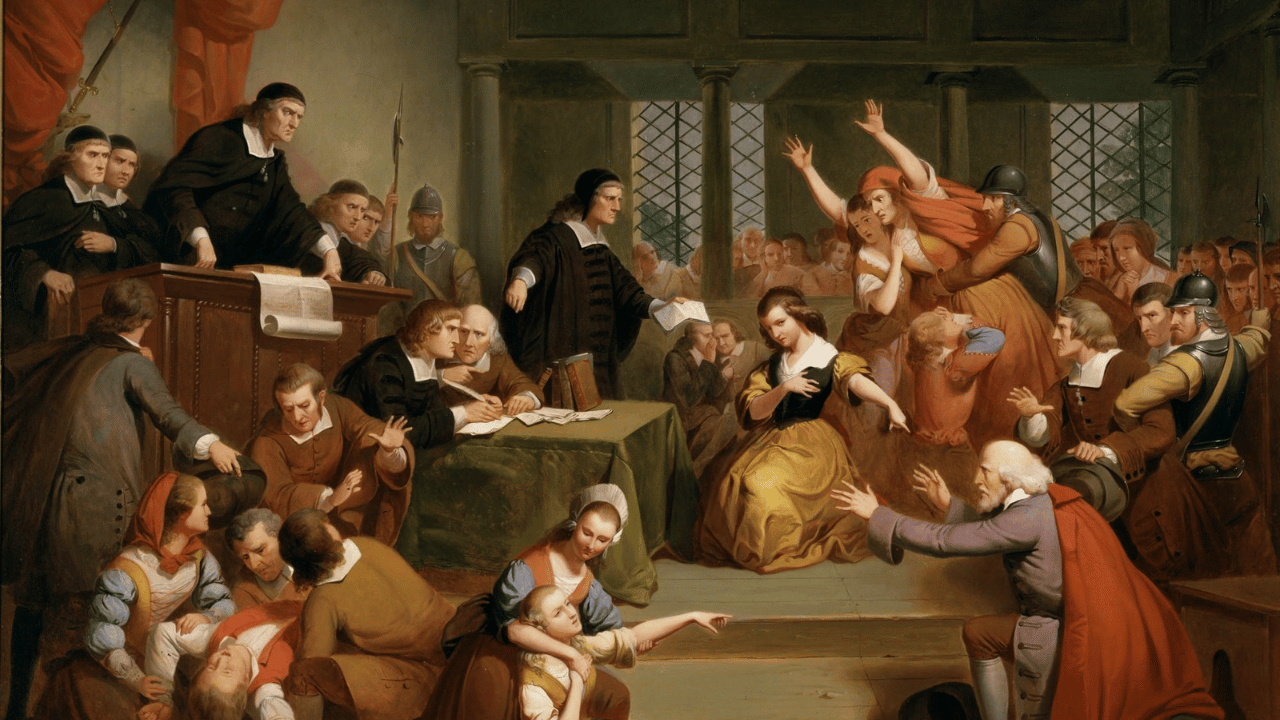
The Salem Witch Trials: What You Need to Know Now
In the annals of American history, few events have left as indelible a mark as the Salem Witch Trials.
Set against the backdrop of 17th-century colonial Massachusetts, this haunting chapter continues to captivate and perplex historians, scholars, and curious minds alike.
This article will take us on a journey to unravel what went down in the infamous Salem Witch Trials. We will delve into the historical contexts and explore the factors that contributed to the hysteria, and reflect on the lasting legacy of this tragic chapter in American history.
Understanding The Salem Witch Trials
The Salem witch trials, a notorious event that took place in 1692, started when a group of young girls in Salem Village, Massachusetts, claimed to be possessed by the devil and accused local women of being witches.
The Gripping Hysteria in Salem Village
This led to widespread panic in colonial Massachusetts, and a special court was set up in Salem to handle the cases.
The tight-knit community of Salem Village was gripped by an inexplicable frenzy. Scores of innocent people – men, women, and even children – faced harrowing trials, enduring imprisonment, torture, and even death.
The town became a crucible of paranoia, fueled by whispered accusations, spectral evidence, and fervent religious beliefs.
Bridget Bishop and the First Convictions
The first person to be convicted, Bridget Bishop, was hanged in June, followed by eighteen others. In the following months, around 150 more individuals, including men, women, and children, were accused of witchcraft.
The court, led by judges like Hathorne, Samuel Sewall, and William Stoughton, handed down its first conviction when Bridget Bishop was found guilty and hanged eight days later on Gallows Hill in Salem Town.
By September 1692, the frenzy began to fade, and public opinion turned against the trials. Eventually, the Massachusetts General Court revoked the guilty verdicts against the accused witches and provided compensation to their families.
However, the community remained scarred, and the painful legacy of the Salem witch trials persisted for centuries.
What Triggered the Hysteria?
Back in those days, people believed in supernatural powers and the idea that certain individuals were witches that could harm others through a pact with the devil. Such belief persisted since the 14th century and was prevalent in colonial New England.
Salem Village and its Struggles
Living in a Puritan community called Salem Village in Massachusetts was challenging due to factors like a recent war, a smallpox epidemic, and fears of Native American attacks, among a few.
Such a tense environment, fueled further by suspicions, resentments, and fear, led residents to turn against their neighbors and harbor mistrust towards outsiders. It eventually triggered the Salem witch trials.
The Bewitching Fits of Betty Parris and Abigail Williams
The trials began when two young girls, Elizabeth (Betty) Parris and Abigail Williams, started experiencing fits in January 1692.
These fits included contortions and uncontrollable screaming. Other girls in the community soon displayed similar symptoms.
Bewitchment was diagnosed by a local doctor named William Griggs. Subsequently, arrest warrants were issued for three women accused by the girls: Tituba, a slave from the Caribbean, Sarah Good, a homeless beggar, and Sarah Osborn, an elderly poor woman.
A Scientific Explanation for the Strange Afflictions
Interestingly, a study published in 1976 suggested a scientific explanation for the strange afflictions experienced by the “bewitched” Salem residents. It proposed that a fungus called ergot, found in cereals like rye and wheat, could cause symptoms such as delusions, vomiting, and muscle spasms.
The Hysteria Continues
The three accused witches faced questioning by magistrates Jonathan Corwin and John Hathorne. In the courtroom, their accusers displayed spasms, contortions, screaming, and writhing.
While Sarah Good and Sarah Osborn denied their guilt, Tituba confessed. To save herself, Tituba claimed there were other witches involved in serving the devil against the Puritans.
Some of the accused confessed and implicated others, overwhelming the local justice system.
More hangings followed in July, August, and September, with a total of eighteen people executed. Seven other accused witches died in jail, and Giles Corey, Martha Corey’s husband, was pressed to death with stones for refusing to enter a plea.
Acknowledging the Tragedy and Apologies
In January 1697, the Massachusetts General Court recognized the tragedy of the Salem witch trials and designated a day of fasting. Later, the court acknowledged that the trials were unlawful, and Samuel Sewall, a prominent justice, publicly apologized for his involvement.
However, the community still suffered from the aftermath, even after Massachusetts Colony passed laws in 1711 to restore the reputations of the condemned and provide financial compensation to their heirs.
The Salem Witch Trials in Pop Culture
The haunting legacy of the Salem witch trials continued into the 20th century. In 1953, playwright Arthur Miller depicted the events of 1692 in his play “The Crucible.”
He used them as a metaphor for the anti-Communist “witch hunts” led by Senator Joseph McCarthy in the 1950s. This connection highlighted the enduring impact of the trials, resonating with a modern audience.
Related articles here:
Bizarre Salem Witch Trial Tests
From sadistic tortures to peculiar rituals and even culinary experiments, here are the different witch trial tests, and also most likely implemented during the Salem witch trials.
These, as you might agree as you delve deeper into this post, list down twisted methods used to determine supernatural misconduct.
Swimming Test
The swimming test was a brutal method used during witch trials to determine whether an accused person was a witch or not.
The accused would be stripped, bound, and thrown into the water to see if they would sink or float.
The belief behind this test was that witches, who had allegedly rejected baptism, would not be accepted by the water and therefore float on the surface.
Innocent individuals, on the other hand, were expected to sink like a stone.
The practice of witch swimming originated from the ancient “trial by water” custom, where suspected criminals and sorcerers were subjected to a similar ordeal.
Although this custom was banned in many European countries during the Middle Ages, it resurfaced in the 17th century as a means of testing witches and continued in some regions until the 18th century.
Incantation Test
The incantations test involved forcing the accused witch to order the devil to release the possessed victim from their trance or fit.
Other people would also speak the words as a control, and judges would observe the victim’s reaction.
One accused “witch”, Alice Samuel, and her family were found guilty based on charges they were forced to make during their witch trial, leading to their execution.
Touch Test
During the Salem Witch Trials, the touch test was used to determine if someone was bewitched.
The suspected witch would touch a person experiencing fits or spells, and if the person reacted, it was seen as proof of the suspect’s spellcasting.
In 1662, accused “witches” Rose Cullender and Amy Denny were hanged as witches based on this test.
Scripture Test
In the Salem Witch Trials, accused witches were made to recite scripture, such as the Lord’s Prayer, without making mistakes.
Any errors were seen as proof of their alliance with the devil.
Even if the prayer was recited flawlessly, it did not guarantee an acquittal, as seen with George Burroughs, who was still executed.
Witch Cakes Test
Witch cakes were used during the Salem Witch Trials to identify witches. A cake made from the urine of the afflicted person, rye meal, and ashes was fed to a dog, hoping that the dog would be bewitched and reveal the guilty witch.
The slave Tituba participated in preparing a witch cake but was later accused of being a witch herself.
Physical Markings
Witch-hunters searched for physical marks on the bodies of suspected witches, such as the Devil’s Mark or witches’ teat.
These marks could be moles, scars, birthmarks, supernumerary nipples, or tattoos, and were believed to be evidence of a pact with the devil.
Villagers desperate to prove their innocence sometimes resorted to burning or cutting off these marks, only to be accused further.
Pricking Tests
In the search for witch’s marks, suspects were subjected to pricking and scratching tests.
Special needles were used to repeatedly stab and prick the accused, looking for spots that did not bleed or feel pain.
Professional “prickers” were often con men who used dulled needles. Scratching by alleged victims was also used as evidence of guilt, as it was believed that scratching the accused would alleviate symptoms of possession.
Impact on the American Legal System
The Salem Witch Trials had a significant impact on the American legal system and continue to influence it today.
During the trials, accused witches were denied many of the legal protections that are now considered fundamental rights.
Presumed Guilty
One crucial aspect was the presumption of innocence, which guarantees that individuals are considered innocent until proven guilty. Meanwhile, the accused witches of Salem were presumed guilty from the start, a far cry from the principles of the modern legal system.
Flaws in Protections
The trials also lacked other essential protections, such as the hearsay rule and the right to defense counsel.
Hearsay evidence, which includes statements made outside of court, was admitted and played a significant role in the convictions.
The accused witches were unable to challenge this evidence through cross-examination, further compromising their rights.
Spectral Evidence and Legal Practices
Moreover, the court heavily relied on spectral evidence, which involved witnesses testifying about encountering the accused’s spirit or spectral shape in dreams.
This acceptance of spectral evidence went against the prevailing legal practice of the time.
Loss of Support and Restitution
The trials eventually lost public support, and the Court of Oyer and Terminer, which was established specifically for the trials, was dissolved.
In the aftermath, Massachusetts passed legislation to exonerate those executed as witches and provide restitution to their families.
Influences on the American Legal System
The lessons learned from the Salem Witch Trials influenced the development of the American legal system.
The trials serve as a cautionary tale, highlighting the importance of ensuring fair legal proceedings and protecting individual rights.
Although a direct line cannot be drawn from the trials to specific legal doctrines, their impact can be seen in the recognition of the need for a Bill of Rights to safeguard fundamental freedoms.
The trials continue to remind us of the dangers of unchecked fear and the importance of reasoned judgment in the law.
Frequently Asked Questions
Who is Tituba and where she was from?
Tituba, an enslaved woman from Barbados, played a crucial role in the Salem witch trials of 1692-1693. Brought to Massachusetts by Samuel Parris, she confessed to witchcraft and accused two other women. She never faced trial although she was imprisoned for more than a year. After her case was dismissed in May 1693, Tituba’s fate remains unknown.
Why did some women admit to being witches during the Salem trials?
To save their lives, some accused witches confessed, encouraged by promises of mercy. A total of 54 individuals admitted guilt during the Salem witch trials. In desperate attempts to protect their loved ones, families and friends would often advocate for confessions. Tragically, this led to divisions and accusations within families themselves.
Did the accused and executed “witches” get justice?
The Superior Court of Judicature replaced the Court of Oyer and Terminer. As a result, many accused individuals were acquitted during the Salem witch trials. In 1693, twelve jurors apologized for their mistaken judgments, and in 1711, compensation was granted to victims. By 1957, the majority of cases were resolved, and families received compensation for the Salem witch hunts.
Conclusion
The Salem Witch trials stand as a haunting reminder of the devastating consequences that can arise from mass hysteria and the erosion of legal safeguards.
The impact of the Salem Witch trials on the American legal system cannot be overstated. The absence of legal protections, such as the presumption of innocence and the right to defense counsel, resulted in a gross miscarriage of justice.
The use of hearsay evidence and the acceptance of spectral evidence further compounded the travesty. However, these events also served as catalysts for legal reform.
Over time, the legal system recognized the importance of fundamental rights and instituted safeguards to prevent future miscarriages of justice.
The establishment of the right to defense counsel and the exclusion of unreliable evidence, such as hearsay and spectral evidence, strengthened the integrity of trials.
Their legacy continues to influence the American legal framework, inspiring ongoing efforts to protect the rights of the accused and prevent the repetition of such tragic events.
If you found this article informative, consider subscribing to our YouTube channel for more historical and thought-provoking content.
More articles here:




Discussion about this post