The Sinister Beauty of Giant Hogweed: Identification and Dangers
In the serene tranquillity of the British countryside, an unexpected adversary often goes unnoticed – the giant hogweed.
Initially indigenous to the Caucasus Region and Central Asia, this formidable plant found its way into the UK as an alluring addition to gardens and landscapes.
Enthusiasts admired its imposing stature and delicate blooms without realising the threat beneath – a dangerous plant that can induce a severe reaction known as “giant hogweed burns” upon contact.
A Look at the Giant Hogweed
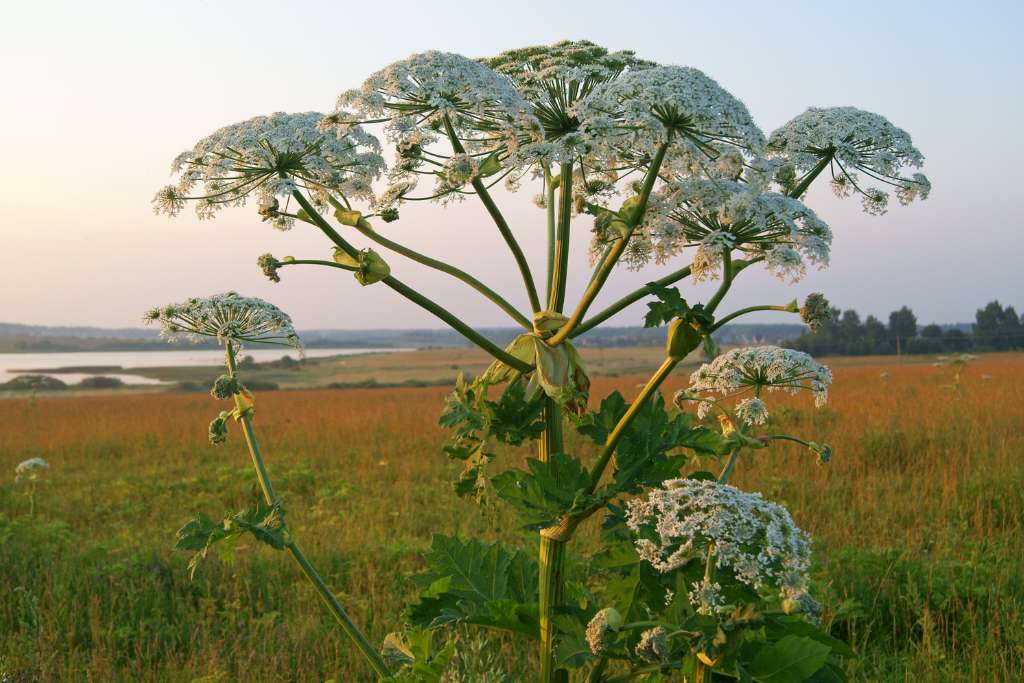
Giant hogweed is an impressive plant that can tower up to five metres, lending it a majestic, albeit deceptive, allure. It boasts broad, deeply incised leaves and large, umbrella-shaped clusters of petite white flowers.
Its leaves and stalks frequently feature eye-catching purple blotches. But within this stunning spectacle lies the hidden danger of the plant’s toxic sap, responsible for the feared giant hogweed burns.
The plant’s stems are hollow, measuring 5-10 cm in diameter, with a ridged and purple-spotted facade. The leaves span 1.5 metres wide, sporting a profoundly lobed, jagged appearance.
The blooms of the giant hogweed emerge from late spring to mid-summer, arranging themselves into impressive, flat-topped clusters that can reach up to 80 cm across.
The Danger of Giant Hogweed Burns
The sap of giant hogweed contains furanocoumarins, a group of organic compounds that can cause phytophotodermatitis, a severe skin inflammation.
Contact with the sap, followed by exposure to sunlight, can provoke painful, burning blisters known as giant hogweed burns. These burns can lead to long-lasting scars and skin pigmentation changes that persist for years.
The Perilous Sap: Suffering From Giant Hogweed Burns
The sap of the giant hogweed contains harmful compounds known as furanocoumarins. These substances can lead to phytophotodermatitis, a severe skin inflammation.
When the sap comes into contact with skin and is subsequently exposed to sunlight, it provokes painful, burning blisters, giving rise to the term “giant hogweed burns”. The blisters can result in long-term scarring and pigmentation changes that can persist for several years.
If the sap reaches the eyes, it can lead to temporary or, in the worst cases, permanent blindness. The seriousness of these reactions underscores the importance of wearing protective clothing and glasses when near this potentially harmful plant.
How To Steer Clear of Giant Hogweed Burns
Education and Identification
Recognising the giant hogweed is your primary line of defence. This crucial step in preventing such hogweed burns requires familiarising yourself with the plant’s distinguishing features.
It’s essential to be particularly vigilant in areas near water bodies and railway tracks, the plant’s preferred habitats.
Protective Measures
Avoid making direct skin contact with the plant if you stumble upon giant hogweed. However, if an interaction is unavoidable, ensure you are clad in protective clothing, fully covering your arms, legs, and hands.
Protective eyewear is also crucial to safeguard against accidental sap splashes.
Reporting Sightings
Discovering giant hogweed in the wild isn’t merely a personal concern; it’s a community issue.
Report your sighting to the local council or environmental agency, which is equipped to safely handle and eradicate the plant, thereby reducing the community-wide risk of this kind of burn.
Anatomy of the Giant Hogweed
Towering up to five metres in height, giant hogweed can be identified by its broad, deeply incised leaves and large clusters of petite white flowers arranged in an umbrella-like formation.
The plant’s stems and leaves frequently feature distinctive purple blotches, an attractive characteristic that hides the danger of the plant’s toxic sap and the potential for these burns.
Understanding the Giant Hogweed Lifecycle
Giant hogweed follows a biennial lifecycle. In its first year, the plant remains in a rosette stage, growing large leaves but staying close to the ground. In the second year, it shoots up, forming tall, flowering stems that produce thousands of seeds.
This lifecycle knowledge can help identify the plant in various stages, thus avoiding potential exposure to such burns.
Safeguarding Children and Pets
Educate children about the dangers of giant hogweed and instruct them not to touch the plant. Pets, too, should be kept away from areas where giant hogweed is prevalent.
If exposure occurs, immediately wash the skin or fur with soap and cold water, and consult a medical or veterinary professional.
Effective Response to Giant Hogweed Burns
If exposure to giant hogweed sap occurs, act promptly. First, thoroughly wash the affected area with soap and cold water, and keep it away from sunlight for at least 48 hours. Should any skin reaction occur, seek medical attention immediately.
Frequently Asked Questions
What should I do if I’ve been exposed to giant hogweed sap?
Should you be exposed to giant hogweed sap, wash the area thoroughly with soap and cold water. Keep it away from sunlight for at least 48 hours, and seek medical advice if a reaction occurs.
Can I remove giant hogweed from my garden?
Giant hogweed is categorised as controlled waste under the Environmental Protection Act, necessitating removal by a licensed waste carrier. Consult your local council for advice on safe removal methods.
Are there any similar-looking plants I should be aware of?
Certain plants, such as cow parsnip and angelica, resemble giant hogweed but pose less danger. Familiarising yourself with these plants’ differences can help alleviate unnecessary worry.
Conclusion
While giant hogweed burns present a significant health hazard, proper knowledge and cautious behaviour can minimise the threat.
Correct identification of the plant, coupled with adequate preventive measures, can ensure the risk-free enjoyment of the UK’s picturesque landscapes.
Knowledge is our most potent tool, empowering us to relish nature responsibly and safely. So stay vigilant, stay informed, and, most importantly, stay safe.
For more intriguing insights into the natural world and practical tips on maintaining safety and environmental responsibility, don’t forget to subscribe to our YouTube channel. Join a community of like-minded people and gain more knowledge about our natural world!




Discussion about this post