Mongolian Empire Ascendancy: The Secrets Behind the Meteoric Rise of an Empire
If you think you know what it takes to build an empire, you haven’t witnessed the history of the Mongolian Empire.
From its humble beginnings to controlling one of the largest contiguous empires in history, the Mongolian Empire was truly unstoppable.
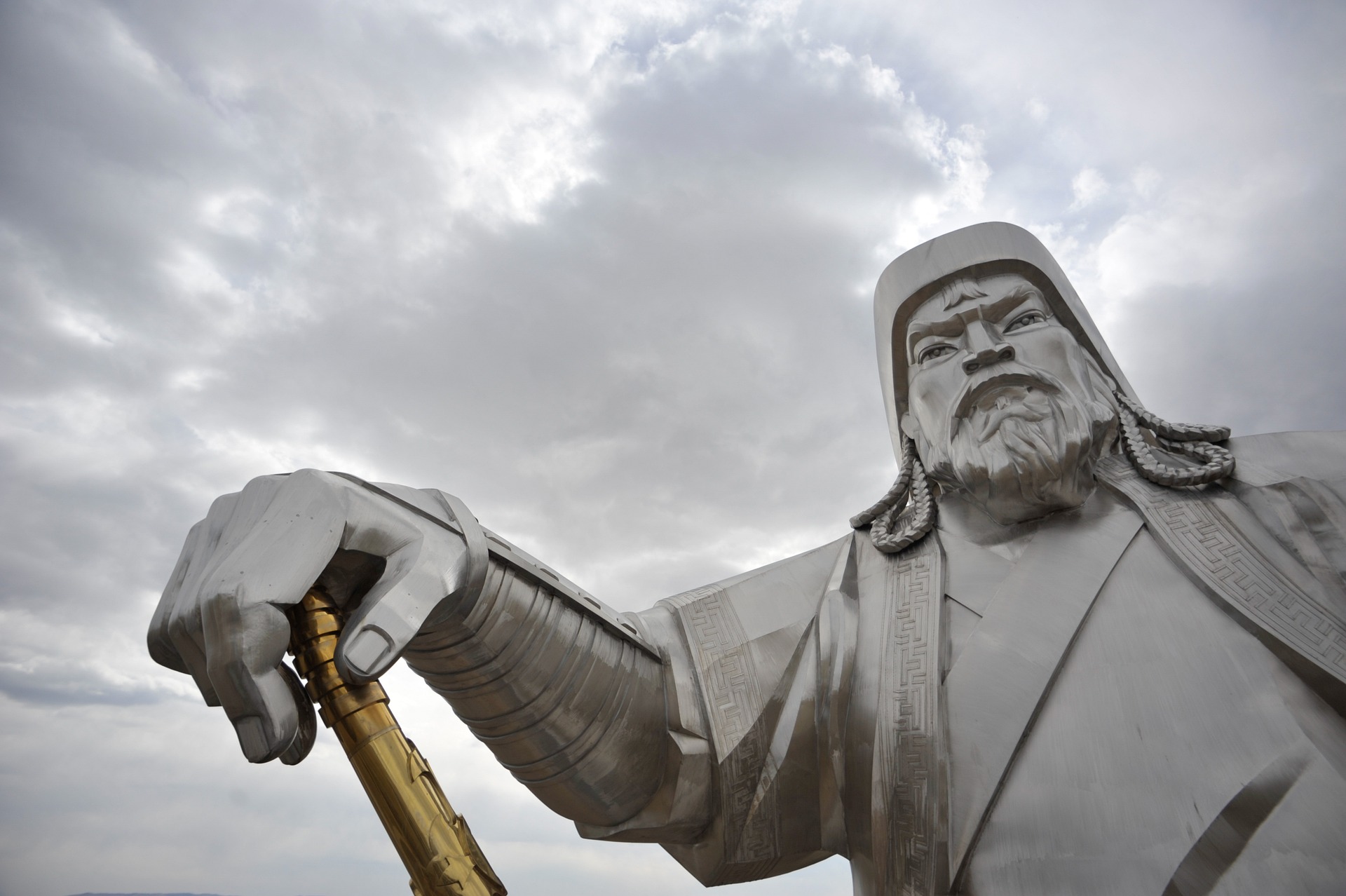
But how did a tribal leader named Genghis Khan lead a nomadic people to unparalleled success, and how did it eventually crumble? Genghis Khan, born Temüjin around 1162 near Lake Baikal, was a member of the royal Borjigin clan. However, his father’s death in a blood feud left him to grow up as an outcast.
Between 1195 and 1205, Temüjin managed to gain control over all the clans in the region, winning popular support and a growing army. In 1206, he was crowned emperor of the Great Mongol State and assumed the title Genghis Khan – something like ‘the universal leader.’ Under Genghis Khan’s leadership, the Mongolian Empire was born.
From the Eurasian Steppe, a belt of land connecting Europe to Central, East, and South Asia, Genghis restructured the army into highly organised units and created laws that fostered trade.
With an efficient, loyal army, he looked in every direction for targets. To the southeast of Mongol lands lay Western Xia, part of what is now China. Genghis had raided the area in 1205, returning in 1207 and launching a full-scale invasion that was completed by 1211.
This gave the Mongolian Empire a tribute-paying vassal state and control over a portion of the Silk Roads increasing their income. From here, the Mongols looked further east to the more powerful Jin Dynasty.
After this, Mongol expansion continued way beyond smaller territories. The Mongols’ empire stretched with such enormity that it went from Eastern Europe to the Sea of Japan.
More conquests, including the capture of Karakorum, were made. But this success ultimately led to their downfall, as the empire became increasingly difficult to govern.
In the next sections, we’ll dive into the Mongol invasions of the Near East, the peak of their power, their downfall, and the legacy they left behind. Get ready to go back in time and experience the history of the Mongolian Empire.
The Early Days of Genghis Khan
Let’s go back to the origins of this great empire. Genghis Khan, originally known as Temujin, was born near Lake Baikal in 1162.
His father was a member of the royal Borjigin clan, but he was killed when Temujin was young, leaving him and his family to grow up as outcasts.
This tough start in life allowed him to develop strong survival instincts, which would be useful in his future conquests. Temujin had to face numerous challenges early on in life. At the age of nine, he was betrothed to Börte, and they married when he was sixteen.
However, Börte was kidnapped by the Merkits, a rival clan, and forced into marriage. Temujin, with the help of a few supporters, tracked down and rescued Börte. This experience taught him the importance of loyalty and the power of close relationships.
Over the next few years, Temujin began his campaign to unify the local clans under his leadership, including his own. He successfully defeated his enemies in a series of military victories, earning him a reputation as a capable military leader.
He was a man of the people and won their trust by sharing the spoils of war with his warriors and their families, rather than just the aristocracy.
This approach was unpopular with the noble minority, but it won popular support and a growing army for Temujin. In 1206, at the age of forty-four, he has crowned emperor of the Great Mongol State and assumed the name Genghis Khan, meaning ‘the universal leader’.
Genghis restructured the army into highly organised units and created laws that forbade the sale of women, theft, and hunting animals during the breeding season, exempted the poor from taxation, and encouraged literacy and trade.
Genghis was a man of action, who believed in leading from the front. He was an accomplished horseman, archer, and swordsman, and often fought in battle himself.
His leadership style was one of inclusivity and meritocracy. He recruited promising young talent, regardless of their background and ensured they received the training and support they needed to thrive. Creating the Mongolian Empire was no easy feat, but Genghis was an intelligent strategist who was always looking for new ways to expand his empire.
He recognised the potential of trade and forged alliances with neighbouring states, allowing him to access previously untapped resources and goods. Genghis Khan’s early life was full of challenges, but he overcame them all to become one of the greatest empire builders in history.
The Mongolian Empire was the result of his cunning military strategy and remarkable leadership skills. It’s no surprise that his legacy lives on to this day.
Expanding the Mongolian Empire
Genghis Khan had already conquered the Western Xia when he turned his gaze to the more powerful Jin Dynasty in China. At first, Jin forces fortified their position behind the Great Wall, but this couldn’t stop the Mongols.
They were aided by a traitor who opened a gate in the Wall, allowing them to bypass the defenses. At the Battle of Yehuling, the Mongol forces were reported, perhaps with some exaggeration, to have killed hundreds of thousands of Jin troops.
Genghis then moved on to the Jin capital of Zhongdu, modern-day Beijing, which fell to his forces. Under Genghis Khan’s successor, the Mongolian Empire grew even larger, conquering new territories and absorbing many different groups and ethnicities into its vast domain.
Kublai Khan, one of Genghis’s grandsons, completed the unification of China and established the Yuan Dynasty.
But the Mongols weren’t just expanding in the east – they were also looking westward towards the lands of the Islamic caliphates. As the Mongol armies swept across Central Asia, they conquered the Khwarazmian Empire, which stretched from the Caspian Sea to the Arabian Sea.
The weakened empire crumbled under the Mongols’ relentless assault. Initially, Genghis had sought only to initiate trade with the Khwarazmians, but a series of insulting acts by the Shah led to the Mongol invasion of the empire.
In retaliation, Genghis launched a massive attack on the Shah’s army, leading to the capture and execution of the Shah himself.
The Mongols then continued their campaign, pushing into Persia and Iraq, and sacking and pillaging as they went. However, the conquest of the Islamic caliphates was not without resistance. In 1258, Baghdad, the center of the powerful and wealthy Abbasid Caliphate, fell to the Mongols, who sacked the city mercilessly.
Syria was next on the Mongol list, as the Seljuk Turks, Armenians, and the Christian Crusader States of Antioch and Tripoli submitted to the Mongols in the wake of the shocking fall of Baghdad. As the empire grew, there were significant changes in the way it was governed.
Kublai Khan, for instance, moved the Mongol capital from Karakorum Mongolia to what is now Beijing, where he established the Yuan dynasty.
However, there were also problems of governance, as the empire’s size made it increasingly hard to manage. Kublai Khan’s empire was undoubtedly impressive, but it would prove to be a victim of its own success. Two failed invasions of Japan and overexpansion had drained the Mongols’ resources.
Additionally, Kublai’s successors were unable to maintain control of such a vast empire. The empire fragmented into four smaller khanates, which were unable to retain control of the Mongol domain.
The Yuan Dynasty in China was overthrown by the Ming Dynasty, and the Mongols were gradually pushed back from the Middle East.
The portion known as the Golden Horde maintained its grip on the Russian principalities for some time, but eventually fell apart. The decline of the Mongolian Empire was due to a combination of factors, including overexpansion, fighting among heirs, and difficulty keeping such a large and diverse empire under control.
However, the impact of the Mongols on world history cannot be overstated. Their conquests reshaped the political, social, and cultural landscape of Eurasia, leaving a lasting legacy that can still be felt today.
Peak of Mongol Power
The Mongolian Empire reached new heights of power while under the reign of Kublai Khan.
The reign of the fourth khan coincided with the empire’s greatest extent, stretching from Eastern Europe to the Sea of Japan, and from Russia to India’s borders in the south. Kublai Khan was the founder of the Chinese Yuan Dynasty and completed the unification of China.
The empire’s capital was moved from Karakorum in Mongolia to present-day Beijing during his reign. The Yuan Dynasty was known for its advancements in art and culture, and Beijing became a hub of creativity and artistic expression.
The Mongols also occupied Russia during their reign, establishing the Golden Horde, which maintained its grip on the region until it was lost in the 15th century.
The Mongol armies also carried out the ruthless sack of Baghdad, which was the centre of the powerful Abbasid Caliphate in 1258.
Following the fall of Baghdad, the Seljuk Turks, Armenians, and the Christian Crusader States of Antioch and Tripoli submitted to the Mongols. Mongol reign over the Middle East marked a significant shift in the region’s balance of power.
Syria fell in the Mongol line of sight, and the Golden Horde maintained its grip on the Rus. However, the Mongols proved to be victims of their own success, with an empire that was too large to govern.
The Mongols suffered two failed invasions of Japan that cost them dearly, both in terms of manpower and resources. In one instance, more than 4,000 ships and 140,000 men were lost in a failed invasion attempt.
The Japanese repelled the Mongols by using their knowledge of the terrain and weather conditions to their advantage. The Mongol invasions of Japan marked the beginning of the empire’s decline. Overexpansion and fighting among heirs contributed to the fall of the Mongolian Empire. The empire was too large to govern effectively, and no single leader could retain control of the vast Mongol domain.
The portion known as the Golden Horde maintained control of Russia, but it was gradually pushed back from the Middle East. The Yuan Dynasty in China lasted only until 1368 when it was overthrown by the Ming Dynasty.
The Mongolian Empire collapsed when Kublai Khan died in 1294, which led to the empire’s fragmentation into four smaller ‘khanates.’ Eventually, each of these smaller empires fell into decline, with their territories slowly chipped away.
The Mongolian Empire’s legacy is profound, and its impact on the world cannot be understated. The empire contributed to the development of international trade, and the Silk Road became a crucial conduit for the exchange of goods and ideas.
The Mongols encouraged literacy and trade and created new laws that benefited ordinary people. The empire’s art and culture thrived, and the memory of Genghis Khan still lives on. The Mongolian Empire’s failures serve as a warning about the dangers of overexpansion and the importance of progressive governance.
The empire’s rise to power was remarkable, but its decline was equally rapid. Still, the impact of the Mongolian Empire on the world remains, and its lessons still have relevance today.
Downfall of the Mongolian Empire
The Mongolian Empire had reached its peak under the reign of Kublai Khan. However, it was the inability to conquer Japan that marked the start of their decline. Kublai Khan’s first attempt in 1274 failed due to typhoon season.
In 1281, the Mongols tried again, but a typhoon destroyed their fleet, leading to the loss of nearly 4,000 ships and a significant number of troops.
The attempt to invade Japan had drained the empire’s resources and marked the beginning of their downfall. The Mongols’ success had been built on their exceptional military machine and the ability to govern a vast empire efficiently. However, their empire had become too large to manage effectively.
As a result, local leaders had begun to act independently, weakening the central government.
Furthermore, the empire’s expansionist policy had stretched its resources thin, making it increasingly difficult to maintain control over distant territories. With mounting internal and external pressures, the Mongolian Empire’s downfall had become inevitable.
Fighting amongst the heirs of the Khanate worsened the situation. Kublai’s death in 1294 led to a protracted struggle for succession and division of the empire into four Khanates. The divisions sparked a civil war among the heirs, further weakening the empire.
The decline was further compounded by rebellions within the empire’s borders. Revolts in Persia, Russia, Korea, and China weakened Mongol authority and shifted the balance of power to the locals.
The Mongol armies, stretched thin, were unable to quell the uprisings, leading to the fragmentation of the empire. The fragmentation was cemented by the collapse of the Yuan dynasty in 1368, ending Mongol rule over China and the surrounding territories.
The collapse marked the end of the Mongolian Empire, and its territories were absorbed into other dynasties. The once great empire no longer existed.
In conclusion, the Mongolian Empire, though remarkable, met its downfall due to several factors. The failure to conquer Japan, overexpansion, fighting among heirs, and fragmentation of the empire were all instrumental in its collapse.
The Mongols had created an empire that was efficient, well-organized, and far-reaching. However, the pressures of maintaining such an empire proved too much to bear. The rise and fall of the Mongolian empire are a testament to the maxim that nothing lasts forever.
Legacy of the Mongolian Empire
The Mongolian Empire is regarded as one of the largest and most powerful empires to ever exist. With its vast network of transportation and communication systems, the
Mongols facilitated trade and commerce in a way that no other empire had before.
This allowed for the movement of goods across vast distances, and merchants and travelers could travel from one end of the empire to the other without fear of being attacked. Art and culture under the Mongols were also notable. The Mongols were great patrons of the arts and invested heavily in the promotion and propagation of culture.
They patronized scholars and artists, making it possible for them to produce their works without fear of censorship or persecution.
The empire played a significant role in the movement of people, ideas, and technology across great distances. The legacy of Genghis Khan is still present today. In Mongolia, the memory of Genghis Khan lives on in the country’s customs, traditions, and culture.
The Eastern influences carried by the Mongolian Empire led to the birth of modern China, with cultural elements such as tea and paper money spreading throughout the world.
The Mongolian Empire had a significant impact on the political and social structures of the regions it conquered. Although the Mongols were known for their brutality in war, they did not discriminate against conquered peoples based on race or religion.
The empire was very cosmopolitan, with a wide variety of ethnic groups and religions being represented in the territories it controlled.
Although the Mongols did impose their own laws and customs, they also allowed local rulers to govern their people. The Mongolian Empire was not without its shortcomings, and its mistakes still serve as lessons to be learned today.
For example, the Mongols overreached in trying to conquer Japan and did not account for the defensive tactics of the Japanese.
Additionally, the vastness of the empire made it increasingly hard to govern, with local rulers often having more power than central authorities.
The legacy of the Mongolian Empire is vast and complex, and its impact is felt even to this day. Although the empire was short-lived, it played a significant role in the development of the world as we know it.
The empire’s contributions to trade, culture, and politics are still felt today, and its lessons learned serve as a warning of what can happen when a great power overreaches. The Mongolian Empire may be gone, but its legacy will be remembered forever.
Frequently Asked Question
What was the Mongolian Empire, and how did it come into existence?
The Mongolian Empire was one of history’s most formidable empires, stretching across vast regions of Asia and Europe. Discover how Genghis Khan and his successors unified the Mongol tribes and laid the foundation for this powerful empire.
What were the key factors behind the rapid rise of the Mongolian Empire?
Explore the strategies, military tactics, and leadership that enabled the Mongols to conquer a vast empire. Learn how their adaptability and organizational skills contributed to their astonishing success.
What territories did the Mongolian Empire encompass, and how did they govern such a vast empire?
Delve into the sprawling territories under Mongol rule, from China to Eastern Europe. Understand the administrative systems, use of local rulers, and unique practices that allowed them to govern such diverse regions.
What were the reasons for the decline and eventual fall of the Mongolian Empire?
Uncover the internal and external factors that led to the empire’s decline, including succession struggles, overextension, and external pressures. Explore how the once-mighty empire fragmented over time.
What is the lasting legacy of the Mongol Empire, and how did it shape the course of history?
Learn about the cultural exchanges, technological advancements, and trade routes established by the Mongol Empire that left an enduring mark on the world. Explore its influence on subsequent empires and the course of history.
Conclusion
The Mongol Empire was one of the largest and most formidable empires in history, reaching all the way from Eastern Europe to China.
Genghis Khan led the tribe to success through his military strategy and innovative leadership. The empire continued to expand under his successors and became a hub of trade and commerce, while also preserving art and culture.
However, overexpansion and fighting among heirs led to the decline of the empire. Despite its downfall, the Mongol legacy continued to impact the world in various ways, including trade and arts.
Lessons could be learned from both the successes and mistakes of the Mongol Empire, highlighting the importance of leadership, strategy, and innovation in creating and sustaining an empire.




Discussion about this post