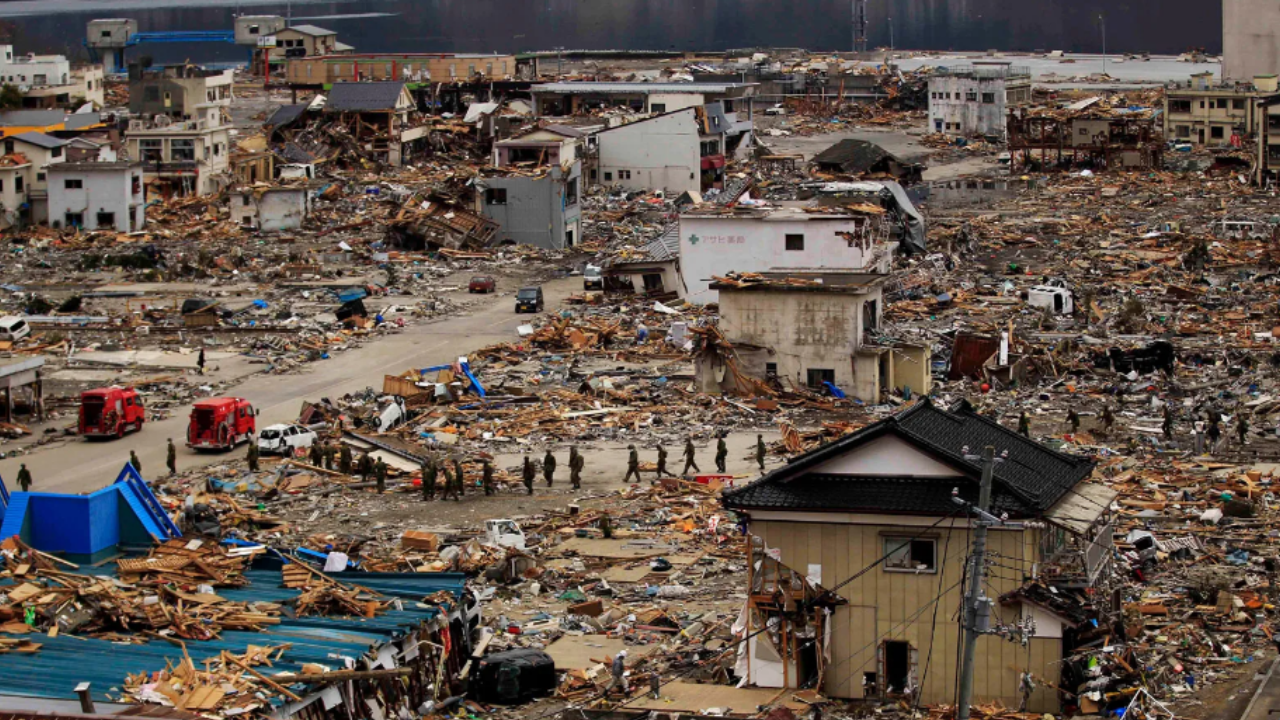
The Tohoku Earthquake: A Shattering Event That Reshaped the World
The Tohoku Earthquake of 2011 stands as an indelible testament to the immense power harnessed by our planet.
This seismic event triggered a devastating tsunami that shattered coastlines, annihilated communities, and claimed thousands of lives. It also reverberated across the globe, leaving an indelible imprint on Earth’s geological and societal tapestry.
This article delves into the cataclysmic event, exploring the far-reaching consequences it brought forth, the lessons learned, and the enduring impacts that continue to shape our understanding of natural disasters and the resilience of affected communities.
Tohoku Earthquake: A Glimpse
On March 11, 2011, Japan was struck by an unprecedented and colossal event—the Tohoku earthquake. It was the most powerful earthquake ever recorded in the country’s history.
The epicenter lay beneath the North Pacific, approximately 130 kilometers (81 miles) east of Sendai, the bustling heart of the Tohoku region in northern Honshu.
This seismic upheaval unleashed a devastating tsunami, an awe-inspiring force of nature caused by the displacement of a massive body of water.
Japan is basically prone to tsunamis due to its geographic location called the “Ring of Fire”. But this specific event was particularly one for the books, albeit in a negative way.
The Tohoku tsunami, with waves towering up to 40 meters (132 feet) high, left a trail of destruction in its wake.
It claimed the lives of over 15,500 individuals, rendered more than 450,000 people homeless, and wreaked havoc upon Japan’s infrastructure. It also led to the destruction of countless homes, businesses, roads, and railways.
Another Catastrophe
Tragically, the calamity did not stop there.
Amidst the chaos, the Fukushima Daiichi Nuclear Power Plant succumbed to the relentless onslaught of the tsunami, leading to a catastrophic meltdown of three nuclear reactors.
This catastrophic event resulted in the release of toxic and radioactive materials into the environment, leaving a lasting impact on the affected region.
The fallout from the Fukushima nuclear disaster forced thousands of residents to evacuate their homes and businesses.
These unprecedented catastrophic events left behind a poignant reminder of the intricate connection between natural disasters and their far-reaching consequences.
Read more about dealing with natural disasters:
- Staying Safe during Earthquake: How to Survive According to Scientists
- 10 Facts – Natural Warning Signs of a Tsunami
Devastating Consequences
The immediate consequences included significant loss of life, destruction of infrastructure, and displacement of hundreds of thousands of people.
In the long term, the impacts ranged from ongoing recovery efforts and reconstruction to addressing environmental and health issues stemming from the Fukushima nuclear disaster.
The event also prompted a reevaluation of earthquake and tsunami preparedness measures worldwide.
Humanitarian and Economic Impact
The 2011 Tohoku earthquake had a profound impact on Japan.
For one, it led to a devastating tsunami that caused a humanitarian crisis and significant economic consequences.
The tsunami forced more than 300,000 people in the Tōhoku region to become refugees, causing shortages of essential resources like food, water, shelter, medicine, and fuel. The disaster also claimed the lives of 15,900 individuals.
In response to this crisis, the Japanese government mobilized the Self-Defence Forces, and several countries sent search and rescue teams to assist in locating survivors.
Aid organizations, both local and international, provided support, with the Japanese Red Cross alone receiving $1 billion in donations.
The economic impact was twofold, with immediate disruptions to industrial production in numerous factories and the long-term challenge of rebuilding, estimated to cost ¥10 trillion (US$122 billion).
Furthermore, the tsunami severely damaged the Fukushima Daiichi Nuclear Power Plant, resulting in significant releases of radioactivity.
This event created a long-term health and environmental hazard, necessitating an expensive cleanup process.
How It Changed Earth
The Tohoku earthquake had some intriguing effects on Earth’s rotation and axis.
Research scientist Richard Gross from NASA’s Jet Propulsion Laboratory used a complex model to estimate the earthquake’s impact on Earth.
His calculations suggest that the redistribution of Earth’s mass caused by the earthquake resulted in a slightly faster rotation, shortening the length of the day by approximately 1.8 microseconds.
Additionally, the quake shifted Earth’s figure axis by about 17 centimeters towards 133 degrees east longitude.
Does It Have an Impact on Our Everyday Life?
Gross noted that these changes in Earth’s rotation and axis are natural occurrences that happen regularly and have no significant impact on our daily lives.
While the effects of earthquakes on Earth’s rotation are generally too small to measure accurately, the estimated shift in the figure axis caused by the Tohoku earthquake may be observable with further analysis.
Scientists will continue investigating these effects as more data becomes available. Ultimately, the earthquake’s influence on Earth’s rotation is interesting from a scientific perspective.
However, it does not have any practical implications for us.
Does It Have an Impact Overseas?
The Tohoku earthquake, one of the strongest recorded in Japan’s history, had a significant impact overseas.
Although it was not the deadliest or largest earthquake of the century, its effects were felt globally.
Tsunamis
Tsunami debris reached shores as far as North America, with Japanese docks, ships, and household items washing up on U.S. and Canadian shores for years following the disaster.
The tsunami waves traveled across the Pacific, reaching Alaska, Hawaii, and Chile, where they still measured 6.6 feet upon arrival.
Shift in Axis
It also caused a redistribution of mass, resulting in a shift in Earth’s axis and a slight shortening of the day by approximately one microsecond.
The earthquake also triggered numerous aftershocks, with the largest measuring a magnitude of 7.9. Coastal regions in Japan.
The island experienced significant drops in elevation, while the main island of Honshu shifted eastward by 8 feet.
Environmental Impact
The seismic waves even impacted distant locations such as Antarctica, where the Whillans Ice Stream accelerated, icebergs broke off the Sulzberger Ice Shelf, and Norway’s fjords experienced noticeable sloshing.
The tsunami resulted in the tragic loss of over 110,000 nesting seabirds at the Midway Atoll National Wildlife Refuge.
Overall, the Tohoku earthquake had far-reaching consequences, demonstrating the interconnectedness of global systems and the profound impact that a single seismic event can have across continents.
Naming of Asteroids
In commemoration of the Tohoku earthquake and with hopes for recovery, several asteroids have been named after the affected areas.
At the Asteroids, Comets, Meteors 2012 conference, the International Astronomical Union approved the naming of 12 asteroids discovered by the Lowell Observatory.
These asteroids, including Aizu, Miyagi, Iwate, Aomori, Ibaraki, Tochigi, Chiba-ken, Hamadori, Nakadori, Rikuzentakata, Sakaemura, and Tsunanmachi, were named after the regions impacted by the earthquake.
The Lowell Observatory’s Near-Earth-Object Search project proposed the names and holds the authority to do so. The local organizing committee for the conference initially drafted the naming proposal.
Asteroid Tohoku was named after the affected area as a tribute to those who lost their lives.
Higashi Nihon was named with the intention of symbolizing recovery, while Daishinsai was named after the earthquake itself to commemorate the event and remember those who perished.
What is The Ring of Fire?
The Ring of Fire, also known as the Circum-Pacific Belt, encircles the Pacific Ocean. It is characterized by a high concentration of active volcanoes and frequent earthquakes.
Stretching approximately 40,000 kilometers (24,900 miles), it follows the boundaries between several tectonic plates, including the Pacific, Juan de Fuca, Cocos, Indian-Australian, Nazca, North American, and Philippine Plates.
It is also the site of 90% of the planet’s earthquakes, encompassing some of the most intense and dramatic seismic events ever recorded. That includes Japan.
Where It Got Its Name
It is called the Ring of Fire because of all the volcanoes that surround the entire belt. It is also home to an astonishing 75% of Earth’s volcanoes, totaling more than 450 volcanic structures.
The abundance of volcanic activity and seismicity along the Ring of Fire is due to the intense movement of tectonic plates in the region.
Convergent boundaries, known as subduction zones, dominate much of the Ring of Fire, where one tectonic plate is forced beneath another.
This subduction process causes rocks to melt and form magma, creating optimal conditions for volcanic eruptions.
However, there is a notable exception along the border of the Pacific and North American Plates, where the Ring of Fire transforms into a sideways-sliding boundary.
This particular stretch generates a significant number of earthquakes as the built-up tension in Earth’s crust is periodically released.
How Strong is a 9.0 Earthquake?
The strength of a magnitude 9.0 earthquake is significantly higher compared to more common magnitudes like 6.0 or 7.0.
While a lower magnitude quake may primarily damage poorly constructed buildings and have shorter durations of shaking, a magnitude 9.0 earthquake is an entirely different scale.
It can last for five minutes or even longer, and the energy released is approximately 1,000 times greater than a magnitude 7.0 quake.
According to the U.S. Geological Survey, these immensely powerful earthquakes have the potential to leave only a few, if any, masonry structures standing.
They can cause severe destruction to bridges and even hurl objects into the air, signifying the enormous force and devastating impact of such an event.
How Common Are Earthquakes in Japan?
Japan experiences approximately 1,500 earthquakes annually, with the majority being minor tremors measuring no more than magnitude 3.9.
This high seismic activity is due to Japan’s position atop four tectonic plates, which are constantly in motion.
Each year, Japan encounters earthquakes of magnitude 6.5 or higher, and sometimes multiple occurrences are observed.
However, the Tōhoku earthquake in March 2011 stood out not only for its considerable size but also due to the magnitude of the tsunami it unleashed and its proximity to susceptible coastal towns and cities.
Has Japan Already Recovered from the 2011 Earthquake?
Since the Tohoku earthquake in 2011, Japan has made significant progress in its recovery efforts.
The government set a 10-year timeline with specific targets, and most of the debris has been cleared through recycling or incineration.
Infrastructure, including roads, bridges, railways, and airports, has been reconstructed. Housing reconstruction is also well underway.
However, the Fukushima nuclear power station failure has posed ongoing challenges.
High radiation levels persist, and decommissioning the plants is expected to take several more decades.
The government remains vigilant in monitoring food safety, as well as agriculture and fisheries production, to ensure that they meet safe limits in inhabited areas.
Frequently Asked Questions
What will happen to the wastewater stored in the Fukushima Power Plant?
Japan’s plan to release wastewater from the Fukushima nuclear plant into the sea has been deemed compliant with international standards by a UN watchdog, the International Atomic Energy Agency. According to the agency, the release will have a minimal impact on the environment. However, the release schedule has not yet been announced, and regulatory approval is still required.
Will Japan have another massive earthquake?
The probabilities of another significant earthquake, such as the Tohoku earthquake, are calculated and adjusted based on the overdue timeframe. The estimated probability of a major earthquake along the Nankai Trough in Japan is approximately 30% within the next 10 years, increasing to 70-80% within 30 years, and reaching around 90% within the next 40 years.
Aside from the 2011 earthquake, what is Tohoku also known for?
The Tohoku Region, located in the northern part of Japan’s Honshu island, comprises six prefectures. Renowned for its scenic countryside, majestic mountains, picturesque lakes, rejuvenating hot springs, and the cultivation of high-quality rice, the Tohoku Region offers a diverse and captivating natural landscape. Despite its charm, the region also experiences harsh winters.
Takeaway
The Tohoku Earthquake stands as a powerful testament to the destructive force of earthquakes and tsunamis.
This catastrophic event served as a wake-up call, shedding light on the importance of comprehensive disaster preparedness, advanced early warning systems, and swift emergency response capabilities.
Moreover, the earthquake brought to the forefront the intricate relationship between natural calamities and human infrastructure. Specifically, in the scrutiny of nuclear power plants.
It sparked critical conversations about risk assessment, safety measures, and the need for resilient structures in the face of future seismic events.
The lessons learned from the Tohoku Earthquake continue to shape policies and practices worldwide, aiming to mitigate the impact of such disasters and safeguard communities at risk.
If you found this article informative, consider subscribing to our YouTube channel for more historical and thought-provoking content.
More articles here:




Discussion about this post