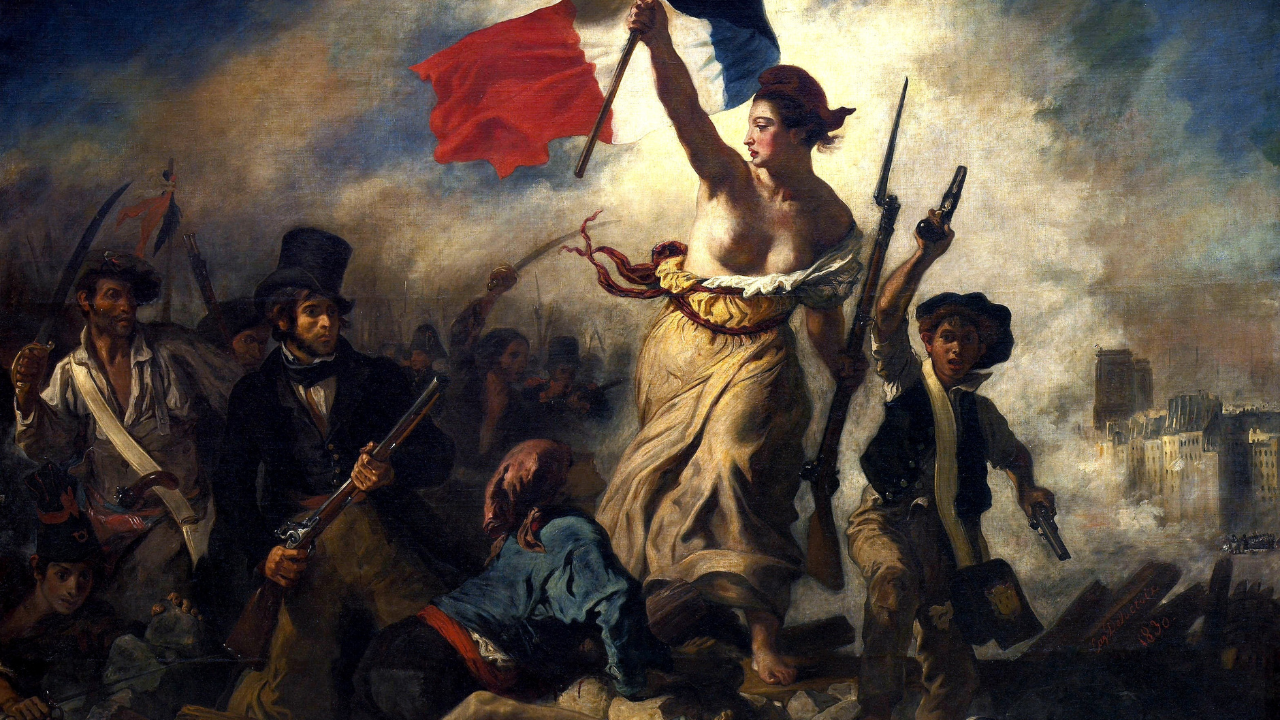
The French Revolution: A Glimpse of France’s Darkest History
The French Revolution, a significant moment in history, went beyond France’s borders and left a lasting impact worldwide.
Taking place from 1789 to 1799, this pivotal event changed politics, society, and culture, sparking revolutions across different countries.
As we explore the intricacies of the French Revolution and its profound effects, we uncover a story of upheaval, enlightenment, and the birth of modern ideas.
This article will delve into its role in the rise of nationalism, the spread of revolutionary ideas, and its impact on international relations and challenging established hierarchies.
Understanding the French Revolution
The French Revolution stands as a turning point in world history. It represented a struggle for social change, political reform, and the pursuit of fundamental rights.
The revolutionaries’ fight against tyranny and their quest for a more egalitarian society continue to inspire and resonate with us today.
At its core, the French Revolution was a response to the oppressive conditions and inequalities that plagued pre-revolutionary France.
The revolutionaries sought to dismantle the rigid social hierarchy, challenge the absolute power of the monarchy, and establish principles of liberty, equality, and fraternity.
The revolution was characterized by key events such as the storming of the Bastille, the rise of political factions like the Jacobins, and the Reign of Terror led by figures like Maximilien Robespierre.
How Bread Ignited the French Revolution
Funny as you might think, but bread has played a major role in the dark days of French history, and ultimately led to the French Revolution.
“Bread or Death”
The bread crisis became a symbol of the social and economic injustices plaguing French society. The slogan “Bread or Death” encapsulated the desperation felt by the hungry masses.
Bread held immense symbolic significance in France. It was not only a vital source of sustenance but also a symbol of the monarchy’s responsibility to ensure the welfare of its subjects.
As bread prices skyrocketed, anger and frustration grew, leading to widespread discontent and a simmering desire for change.
Storming of Bastille
It started on July 14, 1789, when French rebels stormed into the medieval fortress of Bastille. At that time, bread shortages sparked anger against the French monarch.
Although historians did not believe Marie Antoinette actually said the legendary quote “Let them eat cake!”, which is a story for another day, the quote represented how bread triggered the start of the historic European revolution.
Economic Hardships
In the late 18th century, France faced a severe economic downturn, widespread poverty, and an ever-widening wealth gap.
The majority of the population, particularly the urban poor, struggled to afford basic necessities, including bread.
Wheat harvests were poor, and the price of bread soared, making it increasingly unaffordable for the working class.
Women’s March
On October 5, 1789, thousands of women, driven by hunger and desperation, took to the streets of Paris and marched to the royal palace of Versailles. Their demand was simple yet powerful: bread.
The women, accompanied by a group of armed men, confronted King Louis XVI and the royal family, demanding action to address the bread crisis.
This pivotal event marked a turning point in the revolution, as it exposed the vulnerability of the monarchy and emboldened revolutionary fervor among the populace.
Related articles here:
- The Fall of The Romanov Family: Who Betrayed the Ill-Fated Family?
- Mughal Empire Ending – How Did Mughal Empire End?
The French Revolution: A Timeline
The French Revolution, spanning from 1789 to the late 1790s, was a pivotal moment in history. Here’s what happened during the historic revolution that forever changed the world.
1786-1789
Desperation and Resentment Towards the Monarchy
France’s costly involvement in the American Revolution and extravagant spending by King Louis XVI push France to the brink of bankruptcy.
Several years of poor harvests, drought, outbreaks of cattle disease, and soaring bread prices plagued the country.
The people expressed their desperation, resentment, and anger through acts of rioting, looting, and striking.
Calonne’s Reform Package
In response to the mounting crisis, Louis XVI’s controller general, Charles Alexandre de Calonne, presented a financial reform package in the autumn of 1786.
This package aimed to address the dire state of the economy and proposed a significant measure: the introduction of a universal land tax.
Under this proposal, even the aristocratic classes would no longer be exempt from taxation.
These events and the proposed financial reforms set the stage for the ensuing events of the French Revolution, as the economic crisis and social unrest paved the way for more profound changes in the political landscape of France.
Estates General
On May 5, 1789, the Estates General was summoned, representing France’s clergy, nobility, and middle class, for the first time since 1614.
The Estates General was an assembly that represented three estates or social classes in France: the clergy, the nobility, and the middle class.
The purpose of summoning this assembly was to address the pressing issues and grievances facing the nation.
In preparation for the gathering, delegates from each locality were tasked with compiling lists of grievances.
These lists served as a means for the representatives of the three estates to voice the concerns and demands of their constituents.
Transformation of France’s Political Landscape
The assembly of the Estates General on May 5, 1789, marked a crucial moment in French history, symbolizing the attempt to address the grievances of the French population and initiate reforms.
However, it would also lead to further significant events and a radical transformation in the political landscape of France during the course of the French Revolution.
During the French Revolution era, several significant events unfolded between June 17 and June 27, 1789, highlighting the growing tensions and shifts in power within France.
By the time the Estates General gathered at Versailles, the original purpose of the meeting—the discussion of grievances and proposed reforms—had been overshadowed by a heated debate over the voting process.
The three orders—the clergy, the nobility, and the Third Estate (representing the commoners)—found themselves in open hostility, challenging the authority of King Louis XVI.
National Assembly and The Tennis Court Oath
On June 17, recognizing the impasse in negotiations and feeling marginalized by the other two orders, the Third Estate met separately and officially declared themselves the National Assembly, a body representing the interests of the common people.
On June 20, the National Assembly found itself locked out of its usual meeting place at Versailles.
Undeterred, the deputies convened at a nearby indoor tennis court and took what became known as the Tennis Court Oath.
The Tennis Court Oath became a pivotal moment in the French Revolution, symbolizing the defiance of the National Assembly against the traditional order and its determination to establish a more representative and fair system of governance.
Within a week, the National Assembly witnessed a significant expansion in its ranks.
Many of the clerical deputies, as well as 47 liberal nobles, joined the Third Estate in recognition of the need for reform.
Sensing the shifting tides and faced with mounting pressure, King Louis XVI reluctantly acknowledged the new reality.
On June 27, he reluctantly absorbed all three orders—the clergy, the nobility, and the Third Estate—into the new National Assembly, marking a crucial step in the revolution’s progression and the reshaping of political power in France.
Bastille Day and The Great Fear
As the breakdown of royal power gained momentum, the people of Paris became increasingly anxious due to rumors of an imminent military coup.
This atmosphere of fear and uncertainty reached its peak on July 14 when a popular insurgency erupted with the storming of the Bastille fortress.
The rioters sought to seize gunpowder and weapons from the prison, and this event, now commemorated as Bastille Day, is widely regarded as the symbolic start of the French Revolution.
Peasants, in particular, rose up against the oppressive system, looting and burning the homes of tax collectors, landlords, and the aristocratic elite.
This uprising, known as the Great Fear, symbolized the deep-seated anger and frustration of the lower classes.
The Great Fear had far-reaching consequences. It accelerated the exodus of nobles from France, as they feared for their safety and possessions in the face of the mounting popular unrest.
Declaration of the Rights of Man
On August 4, 1789, National Constituent Assembly abolished feudalism, dismantling the long-standing system that had perpetuated social inequality and privilege.
This momentous decision signaled a significant turning point in the French Revolution and the establishment of a more egalitarian society.
The Declaration of the Rights of Man and of the Citizen is adopted, proclaiming democratic principles.
1791-1799
Establishment of a Constitutional Monarchy
France’s first written constitution establishes a constitutional monarchy.
In September 1791, during the French Revolution era, significant developments took place as the National Constituent Assembly grappled with crucial questions regarding the new political landscape of France.
King’s Questionable Authority
Perhaps the most critical question concerned the authority of the king.
King Louis XVI’s public image suffered a severe blow after his failed attempt to flee the country in June 1791.
The Assembly deliberated on how much power the king should retain in the new constitutional framework.
On September 3, 1791, the National Constituent Assembly adopted France’s first written constitution.
Under this system, the king maintained certain privileges, including royal veto power and the ability to appoint ministers.
The constitution also introduced limitations on the king’s authority and implemented a system of checks and balances.
This compromise, which preserved a degree of monarchical power, did not sit well with influential radical figures of the time, such as Maximilien de Robespierre, Camille Desmoulins, and Georges Danton.
The adoption of the constitution marked an attempt to establish a constitutional monarchy, striving to strike a balance between traditional monarchical authority and the aspirations for a more democratic and egalitarian society.
Declaration of War vs Austria and Prussia
On April 1792, France declares war on Austria and Prussia, and the political crisis takes a radical turn.
The Assembly held the belief that French émigrés were forming counterrevolutionary alliances in those countries, and furthermore, sought to promote their revolutionary ideals throughout Europe by means of military conflict.
The Rise of the Radicals and King’s Capture
On the home front, the political crisis escalated when a group of radicals, led by the extremist Jacobins, stormed the royal residence in Paris and captured the king on August 10, 1792.
The next month, the National Convention replaced the Legislative Assembly. They declared an end to the monarchy and established the French Republic.
On January 21, 1793, King Louis XVI was sent to the guillotine for high treason and crimes against the state, and his wife Marie-Antoinette was executed in the same manner nine months after.
Reign of Terror
After the execution of the king, the French Revolution entered its most violent and tumultuous phase due to conflicts with European powers and deep divisions within the National Convention.
In June 1793, the Jacobins took control of the National Convention from the more moderate Girondins and implemented radical measures, such as creating a new calendar and suppressing Christianity.
This period, known as the Reign of Terror, lasted for ten months and involved the execution of thousands of suspected counterrevolutionaries by guillotine.
Many of these executions were carried out on the orders of Robespierre, who held significant power in the oppressive Committee of Public Safety until his own execution on July 28, 1794.
Thermidorian Reaction
After Robespierre’s death, the Thermidorian Reaction began, representing a more moderate phase in which the French people rebelled against the extreme measures of the Reign of Terror.
On August 22, 1795, the National Convention, consisting mostly of surviving Girondins, endorsed a new constitution that established France’s first two-chamber parliament.
The executive authority would be held by a five-member Directory (Directoire) appointed by the parliament.
Although the royalists and Jacobins opposed the new government, they were quickly suppressed by the army, led by a young and accomplished general named Napoleon Bonaparte.
The End of the French Revolution
On November 9, 1799, Napoleon Bonaparte staged a coup d’état, ending the French Revolution and beginning the Napoleonic era.
He abolished the Directory and declared himself France’s “first consul.” This event marked the end of the French Revolution and the start of the Napoleonic era, during which France would exert control over much of continental Europe.
Frequently Asked Questions
Was the French Revolution a success or a failure?
While it successfully ended the feudal system, dissolved the monarchy, and implemented civil laws and fair representation, it ultimately led to the rise of Napoleon Bonaparte and an authoritarian regime. This outcome can be seen as a failure, overshadowing the Revolution’s initial accomplishments in unifying and strengthening France.
What is a guillotine and when was it last used?
The guillotine is a device used for capital punishment by decapitation, popularized in France during the French Revolution in the 18th century. While guillotines were employed by several countries, they are no longer in use anywhere today. France conducted its final execution by guillotine in 1977.
Is King Louis XVI a good king?
Many historians said that King Louis XVI possessed intellectual capacity but lacked decisive leadership and authoritative command. His regime has frequently been characterized as corrupt, indulgent, and indifferent to the needs of his subjects
Takeaway
The French Revolution’s impact on world history cannot be overstated. This momentous event reshaped politics, society, and culture, sparking revolutions across the globe.
It inspired fervent discussions on fundamental rights, the role of government, and social structures, leaving an indelible mark on the trajectory of nations.
The French Revolution’s legacy encompasses the rise of nationalism, the spread of revolutionary ideals, and the dismantling of established hierarchies.
Its echoes continue to reverberate in modern times, reminding us of the power of revolution, the pursuit of liberty, and the ongoing quest for equality and justice.
If you found this article informative, consider subscribing to our YouTube channel for more historical and thought-provoking content.
More articles here:




Discussion about this post