Jack the Ripper Murders: Unmasking the Notorious Serial Killer
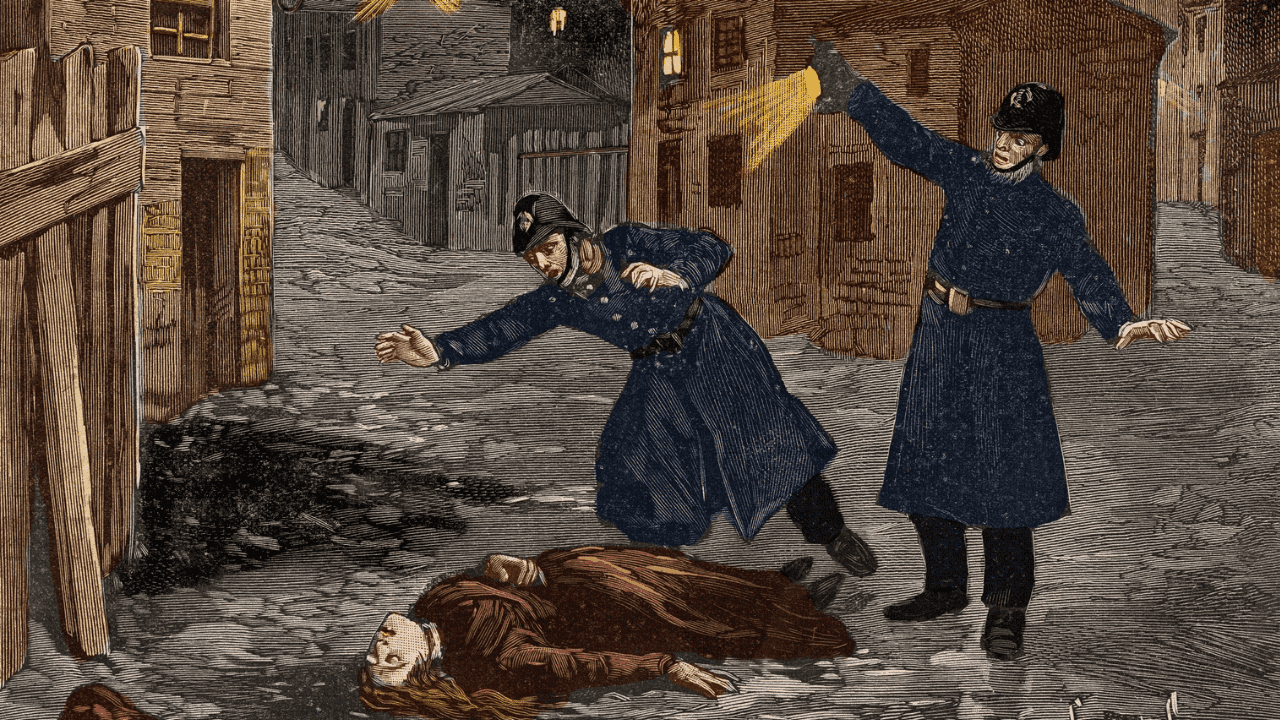
In the late 1800s, a series of gruesome crimes shook London: the infamous “Jack the Ripper murders.” This enigmatic figure terrorized the city’s Whitechapel district, leaving behind a trail of fear and mystery.
Through a chilling examination of the events, this article delves into the horrifying details of these unsolved crimes and their lasting impact on society.
Unmasking the unknown assailant, we explore the eerie blend of brutality and elusiveness that gripped Victorian London, unraveling the fear that Jack the Ripper’s heinous acts instilled in the hearts of an entire era.
Jack the Ripper Murders: Who is He?
Jack the Ripper, an enigmatic figure, gained infamy as the pseudonymous murderer responsible for brutally ending the lives of at least five women, primarily prostitutes, within the Whitechapel district of London’s East End.
These gruesome killings took place between August and November 1888, marking an enduringly perplexing chapter in the annals of English crime history. Despite extensive investigations, Jack the Ripper’s true identity remains shrouded in mystery, leaving the case as one of the most captivating and unsolved enigmas in the realm of criminal investigations.
The locations where these tragic events unfolded have now become haunting landmarks, attracting a morbidly curious stream of tourists to the haunting history of London.
Where the Name Came From
The name “Jack the Ripper” first appeared in a letter called the “Dear Boss letter,” which claimed to be written by the murderer.
This letter was shared in the press. However, many people think this letter was fake, possibly created by journalists to make the story more interesting and sell more newspapers.
Another letter called the “From Hell letter” was sent to George Lusk of the Whitechapel Vigilance Committee. This letter included half of a preserved human kidney, said to be from one of the victims.
As a result of these letters and the media’s attention, the public started believing that there was one person responsible for the series of brutal murders, known as the Jack the Ripper murders.
This belief was fueled by the exceptionally gruesome nature of the crimes and the extensive coverage they received in the media.
Notable Murders
Between 1888 and 1892, a series of puzzling and chilling murders occurred, with some folks suggesting they could be connected to the infamous Jack the Ripper. However, the police officially tied only five of these murders, all taking place in 1888, to the enigmatic figure himself.
These significant cases, often referred to as the “canonical five” in the world of Jack the Ripper murders, involved the victims Mary Ann Nichols (found on August 31), Annie Chapman (discovered on September 8), Elizabeth Stride (uncovered on September 30), Catherine (Kate) Eddowes (also found on September 30), and Mary Jane Kelly (found on November 9).
Many believed these women were prostitutes, and most met their tragic fate while working on the streets. While some books repeated this idea, some of them were based on made-up stories.
Gruesome Killings
The way the Jack the Ripper murders happened had a disturbing pattern. The murderer would cut the victim’s throat and inflict other injuries suggesting a disturbing knowledge of the human body. In a perplexing twist, the police received a portion of a human kidney in the mail, thought to be from one of the victims.
Additionally, taunting letters signed by someone claiming to be Jack the Ripper were sent to the authorities, adding to the mystery and terror. Despite relentless efforts, the identity of the killer remained a puzzle, sparking public anger that led to the resignation of key officials.
This captivating case maintains its allure due to the rarity of serial murders known at the time. The legend of Jack the Ripper murders has inspired a range of books and plays. Notably, Marie Adelaide Lowndes’ book “The Lodger” gained fame and even became the basis for Alfred Hitchcock’s movie “The Lodger: A Story of the London Fog.”
Suspected Men Behind the Killer
Various individuals have been suspected of being Jack the Ripper. Some mention Montague Druitt, who had an interest in surgery and vanished after the final murders.
Others point to Michael Ostrog, a Russian criminal and physician institutionalized for violent tendencies, and Aaron Kosminski, a Polish man from Whitechapel with a strong aversion to women, especially prostitutes. However, these remain speculations.
Other notable figures of the time, such as artist Walter Sickert and doctor Sir William Gull, have also been linked to the mystery. Curiously, the murder sites continue to attract curious visitors, contributing to a unique and eerie tourism industry in London.
Related articles:
Killings in the Whitechapel District
Let us unmask the Infamous Jack the Ripper Murders, considered as a dark chapter in London’s history.
The haunting tale of the Jack the Ripper murders casts a chilling shadow over London’s past. In the late 19th century, a series of gruesome killings sent shockwaves through the city, leaving a trail of horror and unanswered questions.
The enigmatic figure known as Jack the Ripper terrorized the streets of London in 1888, ruthlessly ending the lives of at least five women in a macabre spree that continues to capture the imagination of people worldwide.
Within the span of a mere month, from August 7 to September 10, 1888, the Whitechapel district of London’s East End became the grim stage for a series of brutal murders. All five victims, women whose lives were tragically cut short, were found within a mile of each other, creating a chilling pattern that would forever link them to the name Jack the Ripper.
The gruesome manner in which these women were killed, coupled with the disturbing mutilation of their bodies, suggested a disturbing level of knowledge about human anatomy possessed by the elusive murderer.
Whitechapel During Jack the Ripper’s Era
During the time of the Jack the Ripper murders, the Whitechapel district in the mid-19th century was marked by a significant influx of Irish immigrants, along with Jewish refugees escaping persecution in Eastern Europe.
This led to overcrowding, with the population reaching around 80,000 by 1888. Living and working conditions worsened, resulting in a notable economic divide.
The living conditions were harsh, with a staggering 55% of children born in the area dying before the age of five. Crime, violence, and alcohol dependency were prevalent, and many women turned to prostitution to survive.
London’s Metropolitan Police estimated around 62 brothels and 1,200 women working as prostitutes in Whitechapel by October 1888. Each night, approximately 8,500 people sought shelter in the area’s 233 common lodging-houses, with the cost of a basic bed being fourpence and sleeping on a makeshift rope bed costing two pence per person.
These economic and social challenges gave rise to growing tensions, leading to demonstrations and public unrest. The atmosphere was further strained by factors such as antisemitism, racism, and nativism. This gave rise to perceptions of Whitechapel as a place associated with immorality and societal issues.
These perceptions intensified in 1888 when the infamous “Jack the Ripper” murders occurred. The media’s extensive coverage of these vicious and horrifying crimes further solidified Whitechapel’s reputation and added to the district’s aura of mystery and notoriety.
Letters of Terror and a Sinister Alias
Adding to the horror, the perpetrator taunted law enforcement with a series of letters, some sent to the London Metropolitan Police Service, famously known as Scotland Yard. These letters hinted at the extent of the killer’s malevolent intentions and even speculated about future murders.
It was during this time that the moniker “Jack the Ripper” emerged, believed to originate from a letter published amid the terror. The authenticity of some of these letters remains uncertain, blurring the line between fact and fiction.
Despite numerous investigations and claims of identifying the culprit behind the Jack the Ripper murders, the identity of the killer remains shrouded in mystery.
The true name and motive of this shadowy figure have eluded historians, detectives, and armchair sleuths alike. The legacy of Jack the Ripper endures as an unsolved enigma, captivating the collective imagination and leaving an indelible mark on the annals of crime history.
Web of Suspicions
Over the years, a plethora of theories has emerged, each attempting to unveil the identity of Jack the Ripper. Accusations have ranged from the famous Victorian painter Walter Sickert to a Polish migrant and even the intriguing possibility of a connection to royalty.
The list of potential suspects has grown to over 100, fueling a tapestry of folklore and eerie entertainment surrounding this enduring mystery.
Jack the Ripper Murders: End of Terror
The reign of terror inflicted by the Jack the Ripper murders came to an abrupt halt in the autumn of 1888. Yet, the lingering echoes of the heinous acts continue to reverberate through time. London was left yearning for answers that have remained frustratingly elusive for over a century.
The enduring enigma of the Jack the Ripper murders has transcended the years, birthing a vast industry of books, films, TV series, and historical tours. This dark tale has been etched into public consciousness, captivating generation after generation. However, unraveling the truth has been a formidable challenge, plagued by a multitude of obstacles.
The quest for clarity in the Jack the Ripper case has encountered a web of impediments. The lack of concrete evidence, a maze of misinformation, and the distortion caused by false testimony have all contributed to the complexity of this chilling mystery. Moreover, the stringent regulations imposed by Scotland Yard further shrouded the truth in secrecy.
A New Theory
In recent times, a new theory surrounding the infamous Jack the Ripper murders has emerged, shedding light on a different perspective of the women who fell victim to this notorious killer.
After more than a century of intense speculation about his identity, two female scholars are delving into the lives of Polly, Annie, Elizabeth, Kate, and Mary Jane, aiming to unravel the mysteries that have long surrounded their tragic fates.
Questioning Assumptions
Challenging widely held beliefs, historian Hallie Rubenhold, author of “The Five: The Untold Lives of the Women Killed by Jack the Ripper,” offers a fresh insight into these tragic events.
Contrary to the popular notion that these were primarily sexual crimes, Rubenhold proposes a compelling alternative—that the Ripper may have struck while these women were asleep.
The lives of the victims, Mary Ann Nichols, Annie Eliza Chapman, Elizabeth Stride, Catherine “Kate” Eddowes, and Mary Jane Kelly are reexamined through a new lens. They all met their fate on the streets of London’s Whitechapel neighborhood between August 31 and September 30, 1888.
These women, who endured the harsh realities of the time, were unmarried, in their 40s, and had overcome failed marriages, abuse, alcoholism, and destitution. Importantly, Rubenhold highlights that the majority of them did not engage in sex work to earn a living.
Shedding Light on the Murders
Rubenhold’s theory gains traction as evidence emerges. The victims were found in reclining positions, without signs of struggle, implying that they were asleep when attacked. The absence of reports about screams or signs of resistance from neighbors further supports this perspective. Mary Jane Kelly, the only victim who wasn’t killed on the street, met her end in her bed, similarly in a reclining position.
This new perspective challenges the long-standing assumption that the Ripper specifically targeted prostitutes. Instead, it suggests that the killer may have chosen women who were vulnerable and unsuspecting—those in their slumber.
This shift in narrative not only redefines the understanding of the murders but also prompts a reconsideration of the killer’s motives and his portrayal as a “mythical avenger.”
As we peel back the layers of history and delve into the lives of these women, we uncover a narrative that challenges prevailing notions. This novel theory serves as a reminder that unraveling the mysteries of the past requires us to constantly question assumptions and be open to new insights, even in the case of one of history’s most notorious and enigmatic criminals.
Fascination in the Modern Era Lingers
Jack the Ripper’s legacy has transformed into a fixture of news stories for well over 120 years, captivating the public’s imagination with its sinister allure. This fascination shows no signs of abating and is likely to persist for decades to come, as the shadow cast by these gruesome murders continues to stretch across time.
Even in the modern era, the pursuit of answers faces hurdles. In 2011, British detective Trevor Marriott, a dedicated investigator of the Jack the Ripper murders, encountered a roadblock. His request for access to uncensored case documents was met with refusal by the Metropolitan Police.
The documents, laden with sensitive information about police informants, were withheld to safeguard the possibility of future testimony from contemporary informants.
Frequently Asked Questions
Why did Jack the Ripper kill only women?
Endless speculation surrounds Jack the Ripper’s motives. One theory suggests a crusade against sin and prostitution. Another links him to the Freemasons, aiming to conceal a royal scandal involving Prince Albert Edward Victor.
Who is most likely Jack the Ripper, and why?
Most likely, Jack the Ripper was Aaron Kosminski, a 23-year-old barber of Polish descent living in Whitechapel during the murders. He harbored a strong hatred of women and exhibited “homicidal tendencies.” A study in the Journal of Forensic Sciences supports this theory, suggesting that Kosminski was the infamous killer.
Did Jack the Ripper’s victims know each other?
The notion that Jack the Ripper’s victims were acquainted has been theorized but lacks evidence. While some stayed in the same part of Whitechapel, the area was densely populated, with numerous lodgers sharing cramped spaces. While it’s possible a few victims may have known each other, there’s no substantial reason to believe they did.
Takeaway
As we contemplate the cessation of the Jack the Ripper murders and the legacy they have bestowed upon us, we navigate a complex tapestry woven with secrecy, intrigue, and enduring curiosity.
The haunting tale of these crimes, and the relentless pursuit of truth, remind us that some mysteries may forever remain just beyond our grasp.
As we delve into the disturbing chronicles of the Jack the Ripper murders, we are confronted with a tale of darkness and intrigue that continues to fascinate and confound, inviting us to peer into the abyss of a bygone era’s most enigmatic criminal.
If you find this article informative, consider subscribing to our YouTube channel for more thought-provoking and eye-catching content.
More articles:




Discussion about this post