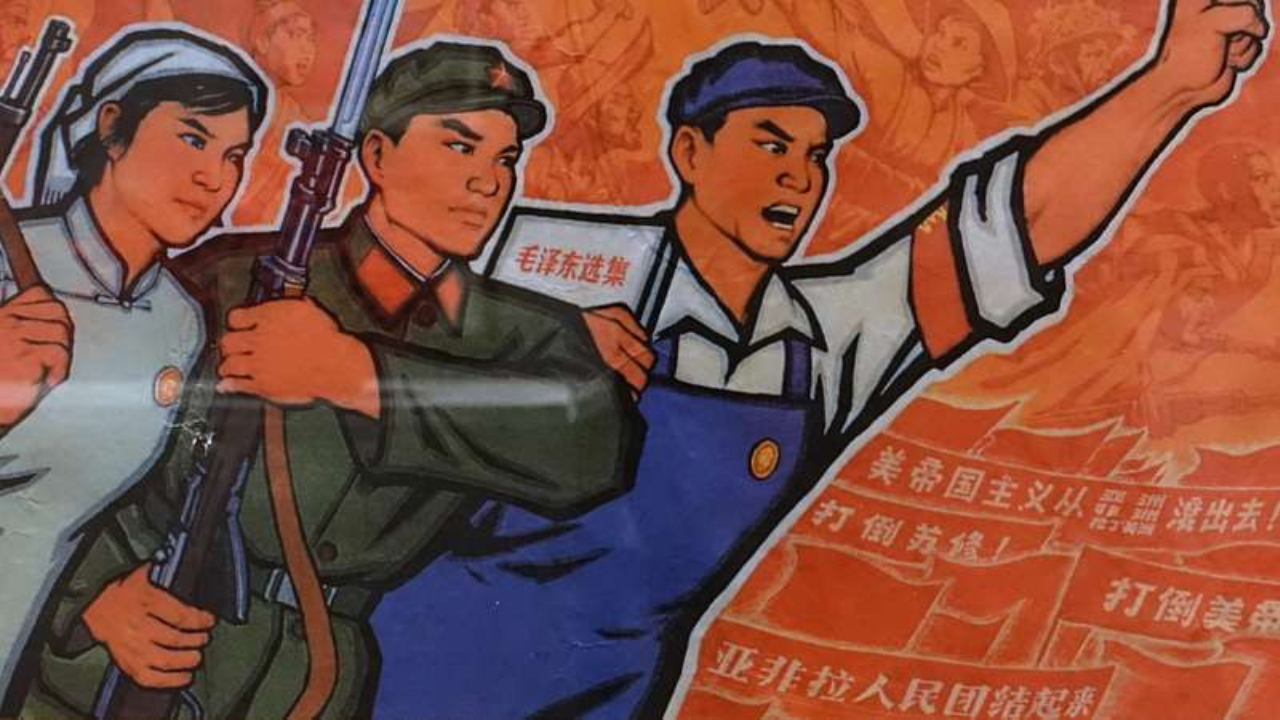
The China Cultural Revolution: The Untold Chaos and A Nation’s Resilience
The China Cultural Revolution, spanning from 1966 to 1976, stands as one of the most significant and tumultuous periods in the nation’s modern history.
Marked by widespread social and political upheaval, this revolution was a transformative era that profoundly impacted China’s society, economy, and political landscape.
By understanding this complex period, we can gain valuable insights that still resonate today.
The lessons from the Cultural Revolution highlight the dangers of extreme ideologies and the importance of historical awareness.
Let’s explore this significant chapter in China’s history that should serve as a reminder of the fragility of societies and the consequences of unchecked power.
What is the China Cultural Revolution?
Led by Chairman Mao Zedong, the Cultural Revolution involved a youth movement called the Red Guards, who aimed to eliminate perceived counter-revolutionary elements.
This tumultuous decade witnessed political purges, violent clashes, destruction of cultural heritage, and the displacement of millions.
When It All Began
The China Cultural Revolution began in 1966 under Mao Zedong, the Communist leader, to regain control over the Chinese government. Mao believed that the current Communist leaders were leading the party and the country astray.
He called on the young people of China to remove the “impure” elements from society and revive the revolutionary spirit that had brought victory in the civil war and the establishment of the People’s Republic of China 20 years earlier.
The Cultural Revolution lasted until Mao’s death in 1976, and its troubled and violent aftermath had a long-lasting impact on Chinese politics and society for many years.
Related articles here:
Why Mao Zedong Started the China Cultural Revolution
Mao Zedong initiated the China Cultural Revolution, also known as the Great Proletarian Cultural Revolution, in 1966.
He was driven by concerns that the existing leadership of the Chinese Communist Party was becoming too revisionist, prioritizing expertise over ideological purity, similar to what he observed in the Soviet Union.
Mao’s own authority had diminished following the failure of his “Great Leap Forward” and subsequent economic crisis.
To regain power, Mao formed a group of radicals, including his wife Jiang Qing and defense minister Lin Biao, to help him challenge the current party leadership.
Intensified and Unleashed
During the Cultural Revolution, Mao closed down schools and mobilized the youth to criticize and confront the party leaders for their perceived adoption of bourgeois values and lack of revolutionary spirit.
The movement swiftly intensified as student groups called the Red Guards emerged, targeting and harassing older and intellectual individuals in China.
A personality cult around Mao developed, reminiscent of Josef Stalin’s cult, with different factions claiming the true interpretation of Maoist ideology.
The population was urged to eliminate the “Four Olds”: old customs, old culture, old habits, and old ideas. This revolutionary fervor defined the era, with the country engulfed in political upheaval and social transformation.
What is The Great Leap Forward?
The China Cultural Revolution: The Great Leap Forward, a five-year economic plan led by Mao Zedong and the Chinese Communist Party, aimed to transform China’s agrarian economy into an industrial society.
However, it resulted in mass starvation, famine, and widespread devastation. Between 30 to 45 million people lost their lives due to famine, execution, and forced labor, making it the largest non-wartime mass killing in history.
The Great Leap Forward serves as a stark example of the failures of socialism and centralized economic planning.
Understanding The Great Leap Forward
The China Cultural Revolution: The Great Leap Forward, an economic program in China, resulted in catastrophic consequences.
The measures implemented led to food shortages, famine, and the death of millions of Chinese citizens.
Factors contributing to the failure included the killing of birds, leading to increased insect populations that damaged crops.
It also led to inadequate food distribution due to limited infrastructure, overproduction of grain resulting in spoilage, and a bias towards feeding urban centers over rural communities.
The estimated death toll ranges from 30 to 45 million individuals. Despite the social and human devastation, the Great Leap Forward set China on a path toward becoming a dominant industrial economy, with subsequent increases in industrial output, agricultural production, and investment.
Who is Lin Biao?
The early phase of the China Cultural Revolution (1966-1968) witnessed the removal of President Liu Shaoqi and other Communist leaders, with Liu eventually dying in prison.
The Red Guard movement, comprising various factions, sparked intense power struggles, pushing Chinese cities to the brink of anarchy.
To restore order, Mao directed Lin Biao to deploy army troops. Consequently, urban members of the Red Guards were compelled to relocate to rural areas, resulting in the decline of the movement.
Amidst the chaos, the Chinese economy experienced a sharp decline, with industrial production in 1968 plummeting by 12 percent compared to 1966.
In 1969, Lin was appointed as Mao’s successor. Exploiting border clashes with Soviet troops, Lin imposed martial law, leading to Mao’s discontent and strategic maneuvering alongside Zhou Enlai to challenge Lin’s authority.
The Little Red Book
The Little Red Book was the official handbook of the China Cultural Revolution, a pocket-sized collection of quotations from Mao Zedong.
It provided a guide for Red Guard members and offered Mao’s wisdom and teachings. Famous counsel such as “Be resolute, fear no sacrifice, and surmount every difficulty to win victory!” resonated within its pages.
The influence of the Little Red Book was widespread, with reading sessions held on public buses and even in the skies above China, where air hostesses preached Mao’s words to passengers.
It was an immensely popular publication, with over a billion copies printed during the 1960s, making it one of the most widely printed books in history.
Bloodshed All Over
The China Cultural Revolution was marked by widespread violence and brutality. Initiated by Mao Zedong, the revolution unleashed chaos and bloodshed across the country.
Red Guards, consisting of Chinese students, were encouraged to target “monsters and demons” and launch an assault on the “four olds” – old ideas, customs, habits, and culture.
Schools, universities, religious sites, and private homes were ransacked, and individuals with “bourgeois” attire or “reactionary” hairstyles were targeted.
Party officials, teachers, and intellectuals faced public humiliation, beatings, and even murder during vicious “struggle sessions.”
Mao’s order for security forces not to interfere led to a high death toll, with nearly 1,800 lives lost in Beijing in August and September 1966 alone.
The chaos soon spread as workers joined the conflict, plunging China into a state of virtual civil war.
Beyond Control
Realizing the revolution had spiraled out of control, Mao attempted to rein in the violence by sending urban youth to the countryside for “re-education” and ordering the army to restore order.
The military dictatorship lasted until about 1971, and the death toll continued to rise.
Historians estimate that between 500,000 and two million people lost their lives during the Cultural Revolution, with reports of mass killings and even cannibalism in some regions.
Contrary to popular belief, the government was responsible for most of the bloodshed, particularly from 1968 to early 1970 when the army intervened.
The lives of influential Communist Party figures, including Deng Xiaoping and Xi Zhongxun, were greatly affected, with purges, public humiliations, and exile.
Tragically, President Xi Jinping’s half-sister, Xi Heping, reportedly took her own life due to persecution during this tumultuous period. The Cultural Revolution left a dark and violent legacy in China’s history.
The Beginning of the End
In September 1971, Lin died in an airplane crash, presumably while attempting to flee to the Soviet Union.
Lin’s tragic demise left many Chinese citizens disillusioned, as Mao’s once-idealistic “revolution” seemed to dissolve into mundane power struggles.
During the China Cultural Revolution, Zhou Enlai worked towards stabilizing China by restoring the educational system and reinstating former officials.
In 1972, both Mao Zedong and Zhou faced health challenges as Mao suffered a stroke and Zhou was diagnosed with cancer.
They threw their support behind Deng Xiaoping, who had previously been purged during the early phase of the Cultural Revolution.
Gang of Four: Aftermath
This support was opposed by the more radical Jiang Qing and her allies, known as the Gang of Four. Chinese politics during this time fluctuated between the two factions.
Eventually, the radicals persuaded Mao to purge Deng in April 1976, shortly after Zhou’s death.
However, after Mao’s death in September of that year, a coalition comprising civil, police, and military forces removed the Gang of Four from power.
Deng regained influence in 1977 and would go on to lead the Chinese government for the next two decades.
In an attempt to move forward while avoiding excessive discrediting of Mao, party leaders orchestrated a public trial for Chairman Mao’s widow, Jiang Qing, and her associates, known as the “Gang of Four”.
Jiang vehemently denied the charges, asserting that she had simply been a loyal follower of Chairman Mao. However, she was initially sentenced to death in 1981, which was later commuted to life imprisonment.
On the eve of the 25th anniversary of the China Cultural Revolution in 1991, Jiang took her own life by hanging herself.
Impact on China
The China Cultural Revolution had a significant impact on the country, but not in the way Mao intended.
Instead of turning China into a communist utopia, the revolution ended up leading to the opposite outcome: the embrace of capitalism and a subsequent economic boom in the 1980s.
One lasting legacy of the Cultural Revolution is the rulers’ obsession with stability and political control.
Current leaders, like Xi Jinping, who witnessed the chaos firsthand as a schoolboy, fear the loss of party control would result in chaos and strive to maintain stability at all costs.
Declining Popularity of Maoism
The upheaval also shattered the people’s faith in Mao and his teachings. Even before Mao’s death, the Chinese people began to bury Maoism, disillusioned by the nightmarish experiences of the revolution.
In the aftermath of Mao’s death, the Communist Party made some efforts to confront the horrors of the Cultural Revolution.
Some individuals involved in violence were punished, while those unfairly persecuted were rehabilitated. However, these efforts gradually faded in the early 1980s, as Beijing became wary of implicating itself and faced opposition from Chinese youth.
As the 50th anniversary of the Cultural Revolution approached, Beijing opted for silence, avoiding public acknowledgment of the party’s guilt and the atrocities committed.
The party is reluctant to admit its responsibility for the immense suffering caused by the Great Famine, the Cultural Revolution, and ongoing environmental destruction.
However, a recent controversy over a Mao-themed event in Beijing unexpectedly brought the decade-long upheaval back into the spotlight, reigniting public discussion and debate about the Cultural Revolution’s legacy.
Frequently Asked Questions
How did the Cultural Revolution affect education, arts, and cultural institutions in China?
The Cultural Revolution disrupted education, leading to school closures and a focus on political indoctrination. Arts and cultural institutions were heavily influenced by the Red Guards, resulting in the destruction of cultural artifacts and suppression of traditional practices. Ideological conformity was enforced, stifling creativity and intellectual pursuits.
How did the Cultural Revolution impact China’s relationship with other countries, particularly the Soviet Union?
The Cultural Revolution strained China’s relationship with the Soviet Union. As Mao denounced Soviet leaders as revisionists, ideological differences deepened. The Sino-Soviet split worsened, leading to border clashes, withdrawal of Soviet aid, and increased tensions between the two countries.
Is the China Cultural Revolution related to the Tiananmen Massacre?
While both the China Cultural Revolution and the Tiananmen Square Massacre are significant events in Chinese history, they are separate occurrences. The China Cultural Revolution occurred from 1966 to 1976, and involved widespread social and political upheaval. On the other hand, the Tiananmen Square Massacre took place on June 4, 1989.
Takeaway
The China Cultural Revolution remains a pivotal chapter in the nation’s history, leaving a profound impact on Modern China.
This tumultuous period, initiated by Mao Zedong, aimed to reshape society but ultimately resulted in widespread violence, chaos, and economic devastation.
The revolution led to the erosion of trust in the party, shattered the people’s faith in Maoism, and left scars that still resonate today.
Despite the immense suffering endured during the Cultural Revolution, it serves as a crucial lesson for China and the world. It highlights the dangers of unchecked ideological fervor, the manipulation of youth, and the devastating consequences of political power struggles.
The revolution’s lasting legacy can be seen in China’s pursuit of stability and control, as well as its subsequent shift towards embracing capitalism and economic reforms.
As we reflect on the China Cultural Revolution, it is essential to remember the importance of upholding human rights, promoting critical thinking, and nurturing a society that values diversity of thought.
By learning from the mistakes and tragedies of the past, we can strive towards a more harmonious and equitable future, ensuring that history does not repeat itself.
If you found this article informative, consider subscribing to our YouTube channel for more historical and thought-provoking content.
More articles here:



Discussion about this post