Saturn’s Moon Marvels: Uncover The Intriguing Moons of Saturn Now
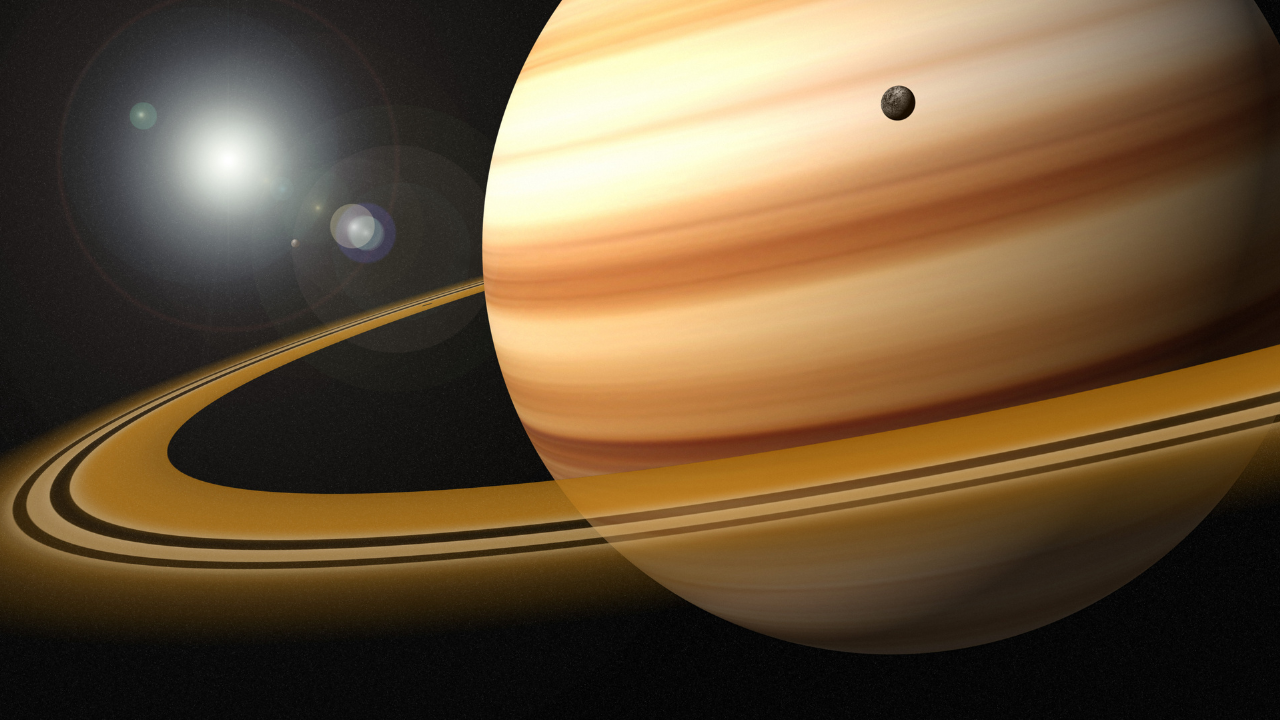
Saturn’s mesmerizing rings have captivated astronomers for centuries, but beyond this gas giant’s dazzling feature lies a remarkable assortment of celestial companions known as Saturn’s moons.
Saturn, the sixth planet from the Sun, boasts a total of 146 confirmed moons, making it the largest moon population in our solar system, surpassed only by Jupiter.
These diverse satellites range from large and well-known ones to smaller and lesser-known ones. But what drives this plethora of moons around certain planets while others possess just a handful?
Delve into this celestial phenomenon as we explore the captivating world of Saturn’s moon and unlock the secrets behind their abundance.
Saturn’s Captivating Moons
Saturn’s moon form a vast and captivating array, showcasing an incredible diversity in size and characteristics. Among the most prominent members of this celestial ensemble are Titan. It is the second-largest moon in our solar system, even bigger than Mercury.
Some of Saturn’s notable moons include:
Titan
Titan, the largest of Saturn’s moons, holds a unique distinction in our solar system as the only moon known to possess a substantial atmosphere. It has a mean diameter of 3,200 miles (5,150 kilometers).
Its atmosphere is primarily composed of nitrogen and methane, extending ten times farther into space than Earth’s atmosphere.
This moon’s surface is veiled in a hazy orange haze, and methane rain occasionally falls upon its surface, shaping its intriguing landscape featuring rivers and lakes.
Rhea
Rhea is a heavily cratered moon primarily composed of ice and rock. It has a mean diameter of 950 miles (1,500 km).
Interestingly, it is tidally locked with Saturn, meaning one side always faces the ringed giant. The Cassini spacecraft detected a thin atmosphere, called an exosphere, around Rhea in 2010, containing oxygen and carbon dioxide.
Iapetus
Iapetus is famously known for its striking surface contrast of light and dark regions, earning it the nickname “yin and yang” of Saturn’s moons. It has a mean diameter of 914 miles (1,470 km)
This moon is thought to be composed of ice and rock, and it possesses one of the tallest mountain ranges in the solar system, spanning along its equator. Giovanni Cassini’s discovery of Iapetus in 1671 revealed one side to be much darker than the other, leading to its enigmatic appearance.
Dione
Dione boasts a heavily cratered surface and a dense core, believed to be a combination of silicate rock and ice. It has a mean diameter of 698 miles (1,120 km)
Curiously, the trailing hemisphere of this tidally locked moon is more heavily cratered than its leading hemisphere, which defies the usual pattern observed in moons impacted by meteors. Scientists are still unraveling the mystery behind this unique feature.
Tethys
Tethys, positioned closely to Saturn, experiences a strong gravitational pull from the planet. It has a mean diameter of 662 miles (1,066 km)
This interaction heats up the moon’s icy surface, leading to the melting of water ice and filling in craters and impact signs. Its highly reflective surface is mostly composed of water ice, and a large trench stretches diagonally from its north to south pole. Intriguingly, strange red arcs have been observed on Tethys, their origin yet to be fully understood.
Enceladus
Enceladus, Saturn’s icy ocean moon, possesses an incredibly reflective surface, making it the whitest moon in our solar system. It has a mean diameter of 313 miles (504 km)
Hidden beneath its frozen shell lies a subsurface ocean, offering conditions that could potentially harbor life.
This enigmatic moon emits icy water particles into space, forming Saturn’s E ring. The presence of nanograins of silica in the E ring suggests the presence of hydrothermal vents within Enceladus’ ocean, raising exciting prospects for further exploration.
Mimas
Mimas stands out with its notable crater, giving it an appearance reminiscent of the fictional Death Star from “Star Wars.” It has a mean diameter of 246 miles (396 km).
Despite being heavily cratered, this moon is primarily composed of water ice, making it unique among Saturn’s moons. Mimas’ unusual geological history raises intriguing questions for scientists, as it orbits closer to Saturn than Enceladus but displays less evidence of internal heat.
Hyperion
Hyperion, Saturn’s spongy-looking moon, showcases a distinct and irregular shape, resembling a potato. It has a mean diameter along its three axes, 255 x 163 x 137 miles (410 x 260 x 220 km, respectively)
Scientists believe that this unique shape might be evidence of its origins as a remnant of a larger moon that was shattered by a significant impact event. Hyperion’s captivating appearance continues to intrigue researchers, as it provides valuable insights into the history and dynamics of the Saturnian moon system.
While the total number of Saturnian moons remains imprecise due to the intricate nature of Saturn’s ring system, there are 83 designated moons still awaiting names, most of which will be drawn from Gallic, Norse, and Inuit mythologies.
Related articles:
- The Mysterious Rings of Saturn: What are They Made of, and How Do They Work?
- Planets of Rings – What Planets Have Rings?
Other Moons
Saturn’s Moon: Here are the other officially named moons and when each was discovered.
- Aegaeon: The smallest known moon of Saturn was imaged on Aug. 15, 2008 and found in two earlier Cassini images.
- Aegir: Discovered on December 12, 2004, by Scott S. Sheppard, David C. Jewitt, and Jan T. Kleyna.
- Albiorix: Discovered on November 9, 2000, by Matthew J. Holman and Timothy B. Spahr.
- Alvaldi: Discovered on December 12, 2004, by Scott S. Sheppard, David C. Jewitt, and Jan T. Kleyna.
- Angrboda: Discovered on December 12, 2004, by Scott S. Sheppard, David C. Jewitt, and Jan T. Kleyna.
- Anthe: Discovered on May 30, 2007, by the Cassini imaging team.
- Atlas: Discovered in 1980 by Richard Terrile and the Voyager 1 team
- Bebhionn: Discovered on December 12, 2004, by Scott S. Sheppard, David C. Jewitt, and Jan T. Kleyna
- Beli: Discovered on December 12, 2004, by Scott S. Sheppard, David C. Jewitt, and Jan T. Kleyna
- Bergelmir: Discovered on December 12, 2004, by Scott S. Sheppard, David C. Jewitt, and Jan T. Kleyna
- Bestla: Discovered on December 12, 2004, by Scott S. Sheppard, David C. Jewitt, and Jan T. Kleyna
- Calypso: Discovered in March 1980 by Dan Pascu, Kenneth Seidelmann, William Baum, and Douglas Currie
- Daphnis: Discovered on May 1, 2005, by the Cassini mission team.
- Eggther: Discovered on December 12, 2004, by Scott S. Sheppard, David C. Jewitt, and Jan T. Kleyna
- Epimetheus: First observed on December 15, 1966, and proposed the name “Janus.” On Dec. 18, 1966, Richard Walker made a similar observation. At that time, astronomers believed they were observing one moon known unofficially as “Janus.” But in October 1978, Stephen M. Larson and John W. Fountain realized that the 1966 observations were of two separate objects (Janus and Epimetheus). This was confirmed by Voyager 1 in 1980. Larson, Fountain, and Walker are all credited in the discovery of Epimetheus.
- Erriapus: Discovered on September 23, 2000, by Brett J. Gladman, John J. Kavelaars, Jean-Marc Petit, Hans Scholl, Matthew J. Holman, Brian G. Marsden, Phillip D. Nicholson, and Joseph A. Burns
- Farbauti: Discovered on December 12, 2004, by Scott S. Sheppard, David C. Jewitt, and Jan T. Kleyna
- Fenrir: Discovered on December 12, 2004, by Scott S. Sheppard, David C. Jewitt, and Jan T. Kleyna
- Fornjot: Discovered on December 12, 2004, by Scott S. Sheppard, David C. Jewitt, and Jan T. Kleyna
- Geirrod: Discovered on December 12, 2004, by Scott S. Sheppard, David C. Jewitt, and Jan T. Kleyna
- Gerd: Discovered on December 12, 2004, by Scott S. Sheppard, David C. Jewitt, and Jan T. Kleyna
- Greip: Discovered on March 6, 2006, by Scott S. Sheppard, David C. Jewitt, and Jan T. Kleyna
- Gridr: Discovered on December 12, 2004, by Scott S. Sheppard, David C. Jewitt, and Jan T. Kleyna
- Gunnlod: Discovered on December 12, 2004, by Scott S. Sheppard, David C. Jewitt, and Jan T. Kleyna
- Hati: Discovered on March 6, 2006, by Scott S. Sheppard, David C. Jewitt, and Jan T. Kleyna
- Helene: Discovered on March 1, 1980, by Pierre Laques and Jean Lecacheux.
- Hyrrokkin: Discovered on March 6, 2006, by Scott S. Sheppard, David C. Jewitt, and Jan T. Kleyna using the Subaru 8.2-m reflector telescope on Mauna Kea, Hawaii.
- Ijiraq: Discovered on September 23, 2000, by Brett J. Gladman, John J. Kavelaars, Jean-Marc Petit, Hans Scholl, Matthew J. Holman, Brian G. Marsden, Phillip D. Nicholson, and Joseph A. Burns
- Janus: Same way the Epimetheus was discovered.
- Jarnsaxa: Discovered on March 6, 2006, by Scott S. Sheppard, David C. Jewitt, and Jan T. Kleyna
- Kari: Discovered on March 6, 2006, by Scott S. Sheppard, David C. Jewitt, and Jan T. Kleyna
- Kiviuq: Discovered on Aug. 7, 2000, by Brett J. Gladman, John J. Kavelaars, Jean-Marc Petit, Hans Scholl, Matthew J. Holman, Brian G. Marsden, Phillip D. Nicholson, and Joseph A. Burns
- Loge: Discovered on March 6, 2006, by Scott S. Sheppard, David C. Jewitt, and Jan T. Kleyna
- Methone: Discovered on June 1, 2004, by the Cassini imaging team.
- Mundilfari: Discovered in 2000 by Brett J. Gladman, John J. Kavelaars, Jean-Marc Petit, Hans Scholl, Matthew J. Holman, Brian G. Marsden, Phillip D. Nicholson, and Joseph A. Burns
- Narvi: Discovered on April 8, 2003, by Scott S. Sheppard, David C. Jewitt, and Jan T. Kleyna.
- Paaliaq: Discovered on August 7, 2000, by Brett J. Gladman, John J. Kavelaars, Jean-Marc Petit, Hans Scholl, Matthew J. Holman, Brian G. Marsden, Phillip D. Nicholson, and Joseph A. Burns
- Pallene: Discovered on June 1, 2005, by the Cassini imaging team.
- Pan: Discovered by Mark Showalter in 1990 using images captured by Voyager 2
- Pandora: Discovered in October 1980 by the Voyager 1 science team.
- Phoebe: Discovered in August 1898 by American astronomer William Pickering.
- Polydeuces: Discovered on Oct. 21, 2004, by the Cassini mission team.
- Prometheus: Discovered in October 1980 by the Voyager 1 science team.
- Siarnaq: Discovered on September 23, 2000, by Brett J. Gladman, John J. Kavelaars, Jean-Marc Petit, Hans Scholl, Matthew J. Holman, Brian G. Marsden, Phillip D. Nicholson, and Joseph A. Burns
- Skathi: Discovered on September 23, 2000, by Brett J. Gladman, John J. Kavelaars, Jean-Marc Petit, Hans Scholl, Matthew J. Holman, Brian G. Marsden, Phillip D. Nicholson, and Joseph A. Burns
- Skoll: Discovered on March 6, 2006, by Scott S. Sheppard, David C. Jewitt, and Jan T. Kleyna
- Skrymir: Discovered on December 12, 2004, by Scott S. Sheppard, David C. Jewitt, and Jan T. Kleyna
- Surtur: Discovered on March 6, 2006, by Scott S. Sheppard, David C. Jewitt, and Jan T. Kleyna
- Suttungr: Discovered in 2000 by Brett J. Gladman, John J. Kavelaars, Jean-Marc Petit, Hans Scholl, Matthew J. Holman, Brian G. Marsden, Phillip D. Nicholson, and Joseph A. Burns
- Tarqeq: Discovered on January 16, 2007, by Scott S. Sheppard, David C. Jewitt, and Jan T. Kleyna
- Tarvos: Discovered on September 23, 2000, by Brett J. Gladman, John J. Kavelaars, Jean-Marc Petit, Hans Scholl, Matthew J. Holman, Brian G. Marsden, Phillip D. Nicholson, and Joseph A. Burns
- Telesto: Discovered in 1980 by Brad Smith, Harold Reitsema, Stephen Larson, and John Fountain
- Thiazzi: Discovered on December 12, 2004, by Scott S. Sheppard, David C. Jewitt, and Jan T. Kleyna at the Mauna Kea Observatories, Hawaii.
- Thrymr: Discovered in 2000 by Brett J. Gladman, John J. Kavelaars, Jean-Marc Petit, Hans Scholl, Matthew J. Holman, Brian G. Marsden, Phillip D. Nicholson, and Joseph A. Burns using the 3.6-m Canada-France-Hawaii reflector on Mauna Kea, Hawaii.
- Ymir: Discovered in 2000 by Brett J. Gladman, John J. Kavelaars, Jean-Marc Petit, Hans Scholl, Matthew J. Holman, Brian G. Marsden, Phillip D. Nicholson, and Joseph A. Burns
Frequently Asked Questions
Why use Gallic, Norse, and Inuit mythologies as Saturn moons’ names?
Saturn’s moons are named after figures from Gallic, Norse, and Inuit mythologies, following John Herschel’s proposal in 1847. The choice of names was inspired by the family of Saturn and his brothers and sisters. As the names of Titans were exhausted, other characters from Greco-Roman mythology and giants from various mythologies were used. The irregular moons were named after Inuit and Gallic gods and Norse ice giants. Some asteroids also share names with Saturn’s moons.
Do Saturn’s moon have rings, too?
Yes, some of Saturn’s moons, including Atlas, Prometheus, and Pandora, have ring material on their surfaces. However, they are also coated with bright icy particles and water vapor from the plume emanating from Enceladus, which contributes to the formation of Saturn’s E ring.
How old are Saturn’s moons?
Saturn’s moons were formed around the same time as the solar system, over 4 billion years ago. However, recent modeling suggests that some of the moons might be younger, possibly only 100 million years old or less.
How old are Saturn’s moons?
Saturn’s moons were formed around the same time as the solar system, over 4 billion years ago. However, recent modeling suggests that some of the moons might be younger, possibly only 100 million years old or less.
Takeaway
Saturn’s moon continue to captivate astronomers and space enthusiasts alike, offering a diverse and fascinating array of celestial bodies.
From the grandeur of Titan, with its Earth-like atmosphere and hydrocarbon lakes, to the icy plumes of Enceladus potentially harboring conditions for life, each moon has its unique story to tell.
Their ages, once thought to be as ancient as the solar system, now raise intriguing questions about their formation and evolution.
As we delve deeper into the mysteries of Saturn’s moon system, ongoing research and exploration promise to unveil even more secrets, shedding light on the enigmatic wonders that adorn the ringed giant in our celestial neighborhood.
If you found this article informative, consider subscribing to our YouTube channel for more historical and thought-provoking content.
More articles here:




Discussion about this post